
I’m Suffering Headaches After a Car Accident. What Should I Do?

I’m Suffering Headaches After a Car Accident. What Should I Do?

[vc_row][vc_column][vc_column_text]

Headaches are a common complaint after a car accident. Why do they occur? It can be the abrupt stop that throws your head back and forth. This back and forth motion causes the brain to bounce around in the skull. Headaches are a sign of whiplash. They can also occur if your head hits a hard object like the window frame. Even the stress related to filling out lengthy car accident reports and insurance claims can cause headaches. Headaches are not a symptom to ignore. They’re real pain and can be indicators of more serious issues. If you’re experiencing headaches following a crash, take these steps.

Talk to a Doctor

Ideally, when the accident occurred you went to the hospital or were seen by paramedics. This starts a paper trail that ties your injuries to the accident. What you don’t want is an insurance adjuster trying to claim that something happened to you between the time of the accident and the time you experienced headaches. It can be harder to prove injuries were the result of the accident if you refused a medical examination.

Follow your doctor’s orders. If you’re told to call if you experience any new symptoms, do exactly that. You might not think that slight ache is worth troubling a doctor, but it could be a warning sign for something bigger. If your doctor says to avoid computers or TV screens for a full week, do that too. If you have a concussion and ignore orders, you could cause additional damage.

Know the Types of Headaches

One of the most common headaches occurs with a concussion. A concussion occurs when you take a blow to the head or when the head or body is violently shaken. Rapidly being thrown forward and backward during a crash, hitting the steel frame of the car, or hitting another object in the car all can cause concussions. Symptoms include headaches, dizziness, confusion, and fatigue. With a concussion, your doctor will likely tell you to go home with someone who can monitor you for a day or two. You’ll have to give up sports, too much social activity, and screen time for a day or two and take over-the-counter medications for the headache pain.

Whiplash is another common reason for a crash-related headache. Whiplash can take days to present following a car accident. It’s an injury of the muscles, ligaments, nerves, or bones in the upper spine. The quick back and forth motion causes whiplash. The force of a rear-end collision thrusts your back into the headrest, towards the windshield, and back to the headrest, which strains the neck. Symptoms include neck pain, pain that extends into the arms, headache, loss of motion, fatigue, and dizziness. It’s unlikely a doctor will find evidence of whiplash in X-rays, MRIs, or CT scans. Those scans can rule out other injuries, however. If whiplash is diagnosed, you’ll use over-the-counter medications for the pain. Physical therapy is often used to help improve movement.

Bruising on the brain happens when the brain bounces around in the skull during a car crash. This bruising heals over time, but it can cause headaches in the meantime. It’s a form of traumatic brain injury that’s mild. If the injury goes beyond bruises, broken blood vessels put pressure on the brain in a condition known as intracranial hematomas. If blood vessels break, the pressure needs to be relieved immediately. Intracranial hematomas need urgent medical attention, so it’s best to see a doctor if there is any sign of a headache. If a doctor says the headache is normal and to go home and rest, it’s your right to ask for a second opinion. If you feel the headache is not typical, speak up. You don’t want to be an hour from a hospital when blood vessels rupture.

Stress headaches are possible and harder to prove. You deal with a lot after a car crash. You’re talking to insurance companies to get claims started. You have to file police reports and answer a lot of questions. You have to schedule time off work if the injuries affect your ability to work. You need to get another car. It’s stressful. Stress headaches are usually mild to moderate and occur with muscle tension. Stress-reducing techniques may help, but it’s more likely you’ll need to take over-the-counter medications to ease the pain until things are back to normal. Stress headaches are one of the most problematic when it comes to auto insurance settlements. The insurance adjuster is likely to claim you’re making it up to get more money.

If the crash you’re in causes a skull fracture, you’re going to have a severe headache. It’s also common to have nausea, slurred speech, and confusion. If there’s brain swelling, you may need to undergo surgery to reduce the pressure. You’ll be in the hospital for a while, so you have to take time off work. You’ll have plenty of follow-up appointments. You may need physical therapy. If the brain injury causes lasting damage, you may not be able to remain in the job you had. You must seek legal representation as a skull fracture can completely change your life.

When you’re dealing with a headache on this list, only a skull fracture is one you can easily prove. The others won’t be noticeable in x-rays, scans, or by having the doctor press different areas of your skull. You have to communicate your symptoms as best as you can. You need to make sure you tell the doctor if your symptoms worsen or change. Keep copies of all paperwork you get from the doctor’s office or hospital. You may need that if you have to seek a lawyer’s help in getting a fair settlement.

What Happens if the Insurance Company Denies Medical Coverage?

What do you do if the insurance company refuses to pay for medical bills related to your headaches? Don’t panic. It’s going to be stressful hearing “no,” but you have every right to fight for coverage of your headache-related medical bills.

Auto insurance companies want proof that injuries are real and not faked. Headaches are hard to prove as many types of headaches won’t show up on scans. They have to take your word for it, and that’s not something they want to do. You need the strongest proof you can get from a medical professional. This is where your doctor and/or a headache specialist is important. The second most important person to talk to is an experienced head injury attorney.

You may think it’s easier to take the amount the insurance company offers, but what if it’s not enough? What if you sign the paperwork and find it’s harder to get a similar car than you thought for the money you’ve been given in the settlement? What if the headaches haven’t gone away after months? Accepting the first settlement offer isn’t in your best interest. You must be sure to talk to a car accident attorney.

Trial Lawyers For Justice is here for you. If you’re suffering from headaches following a motor vehicle accident, talk to us. You can reach us via live chat or by calling 1-866-TL4J-LAW. Our attorneys are available 24/7 to answer your questions and help you understand the next steps to take regarding your car accident. Don’t worry about the legal fees. If we can help you, you don’t pay anything unless we win.

[/vc_column_text][vc_empty_space height=”11px”][/vc_column][/vc_row]

Trial Lawyers for Justice Wins $975,000 in Low Impact Crash Case Against State of Iowa

Trial Lawyers for Justice Wins $975,000 in Low Impact Crash Case Against State of Iowa

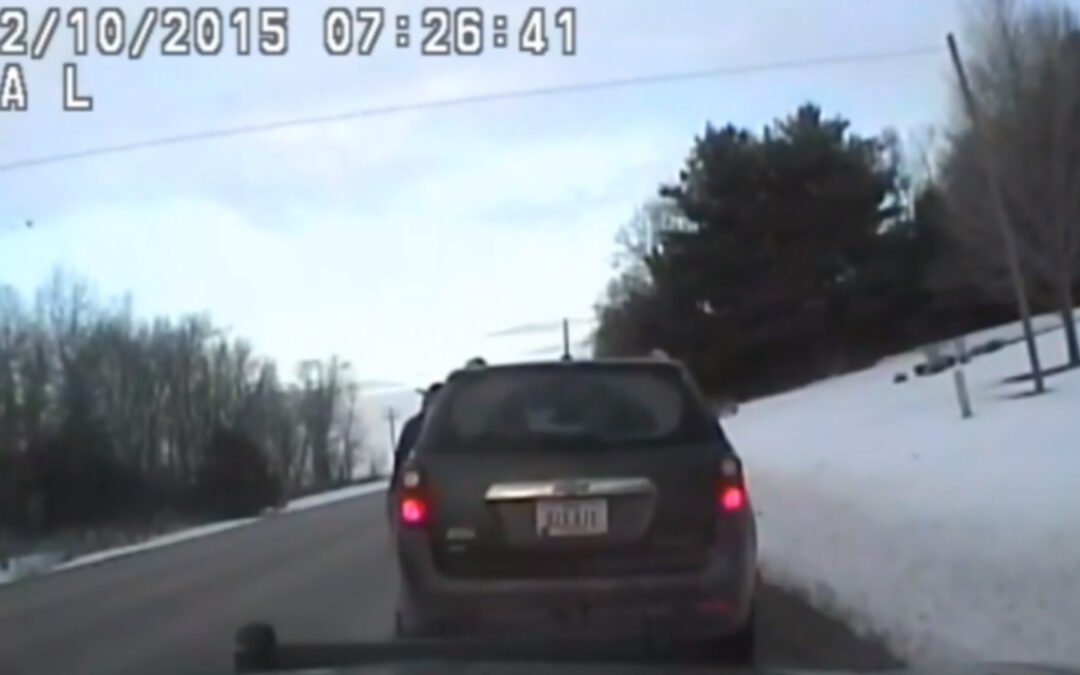
In February 2015, a 44 year old man was pulled over by an Iowa State Trooper for speeding.  As the State Trooper was writing the ticket, his vehicle, left un-parked, rolled down a slight decline and rear ended our client’s vehicle.  No noticeable physical damage was done to either vehicle.  The impact was recorded on the Trooper’s dash cam and the defense experts said there was no way our client was hurt by the impact.  We had to reconstruct what happened.

As it turned out, the client was looking down at the time of impact signing his warning ticket. Despite looking fine on the dash cam and returning to work, the following day he went to his doctor because he was experiencing pain and tingling in his arm.  He was diagnosed with a cervical muscle strain and mild paresthesia.  The radiating pain continued so an MRI was ordered showing “very advanced degeneration”.  He had an anterior cervical discectomy surgery and suffered a complication of right vocal cord paralysis, a known but rare complication of the surgery.  While his voice got better, he now suffers with less breathing capacity and swallowing difficulty.

The State of Iowa retained expert neurosurgeon Dr. Todd Ridenour from Davenport, Iowa and physiatrist Dr. Joseph Chen from University of Iowa Hospitals & Clinics who gave opinions that the client’s on-going neck and back complaints were caused primarily by preexisting degenerative changes and/or the client’s active lifestyle, which included horseback riding.  Just three weeks before trial, counsel for the State of Iowa disclosed a conglomeration of the client’s Facebook posts taken after the first crash with the police cruiser showing the client horseback riding, ziplining, and boating.  The Facebook posts predated Trial Lawyer’s for Justice’s involvement in the case.  Further complicating matters, the client was involved in two subsequent motor vehicle collisions.  After an October 2, 2015 collision, the client complained of neck pain, and following a third collision on February 9, 2017, which was a high speed collision, the client received emergency medical care for neck pain following the third collision.

Our client continued working full time to take care of his family so there was no wage loss claim.  We also waived past medicals of approximately $50,000.  The Friday before trial was set to begin in Linn County District Court, the State of Iowa offered $975,000 to settle the case. Prior to TL4J being brought into the case, the State of Iowa made no offers to settle the case despite repeated demands.

Trial Lawyers for Justice was represented by Courtney Rowley, Nicholas Rowley, Dominic Pechota, and Matt Reilly.

I Was Involved in an Accident With Farm Equipment or a Tractor. What Should I Do?

I Was Involved in an Accident With Farm Equipment or a Tractor. What Should I Do?

[vc_row][vc_column][vc_column_text]

Every day, you hear about car crashes between a truck and car, a vehicle and a solid object like a phone pole or tree, or between pedestrians and vehicles. There’s another form of motor vehicle accident that isn’t heard of as often, but these accidents do occur and can become complicated. When your vehicle crashes into a piece of farm equipment or a tractor, it’s especially frustrating. What do you do?

Tractors and Farm Equipment Can Use Public Roadways

Legally, a tractor or other piece of farm equipment is allowed to be on public roadways. The driver of the tractor or other equipment was likely well within his/her right to be on the road. States often have their own rules, however, so look into the local and state laws. The laws are there for a reason.

Statistics on the number of crashes vary greatly from one state to the next. In the Midwest, around 7,000 vehicle and farm equipment crashes occurred during a five-year period. While 7 out of 10 crashes were in rural areas, the remaining crashes happened in urban areas. It’s not a problem specific to small towns and rural areas. Tractor and farm equipment drivers need to take preventative measures to make sure they’re visible, but drivers also need to be cautious when approaching them and only pass if there is room and there’s no oncoming traffic.

These slower vehicles pose significant hazards. Those on a tractor or motorized farm equipment are not likely to have the modern safety equipment a car has. Seatbelts may not get used. If the tractor rolls, crushing injuries are very likely. Meanwhile, farm equipment is often wider than a single lane. If a car comes around a corner at normal speeds and finds a slow-moving tractor, there’s the risk for a head-on collision. If it’s before sunrise or after sunset, an unlit piece of farm equipment may not be visible until the vehicle is right on top of it. Visibility is a driving force behind state laws that apply to farm equipment that uses public roadways.

For example, the Iowa Department of Transportation has a rule in place that tractors and other pieces of farm equipment must have a “Slow Moving Vehicle” emblem measuring no less than 13.8 inches and made from a fluorescent red-orange material that’s surrounded by a reflective red border. That emblem has to be between 2 and 10 feet from the ground and prominently displayed on the rear. Emblems must be cleaned and inspected regularly and replaced if they fade. If you’re in an accident with a tractor that lacked that emblem, note it. Take photos to show that they lacked that visibility measure.

Treat it Like Any Accident

Treat this like any accident. Call the police to start the accident investigation. If you’re okay, you can check on the other driver. Take photos of the tractor/farm equipment, accident scene, and your care if you’re able. Get witness names. See if the farm equipment’s operator has insurance. At the very least, get the name and contact information for the farm and the operator’s license information. Let the paramedics check you for injuries. If it’s recommended you go to the hospital, do so. It’s better to take the time to be seen than risking your health to injuries you don’t feel at that moment.

At home, you can call your insurance agent to get a claim started. If the farm does have insurance, the investigation into who was at fault will begin. They’ll need to know witness names and contact information, the farm’s contact information, and the driver’s information.

Injuries sustained during a collision with farm equipment may be serious as those operating the farm equipment may not have the same safety features that cars do. Tractors are often open and lack things like airbags and steel frames. Not every state requires farm vehicles to be registered, so there may not be an insurance policy in place. If you crash into a tractor that’s not illuminated or visible when it’s dark out, even if it’s not your fault, your insurance may need to cover the damages using uninsured motorist coverage if the other operator lacks insurance.

After a collision with farm equipment, you do need to focus on your health first. Once that’s done, consider calling a legal expert who understands the laws regarding crashes with farm equipment. It helps if you have a knowledgeable car crash attorney to answer your questions and help you understand your rights and obligations.

What If It’s the Other Way Around?

If you were operating the farm equipment and a car passed unsafely and crashed into you, follow the same steps. Focus on your own injuries first. If you’re hurt, stay still and let the paramedics help you. Make sure a witness calls the police to start the accident report. Follow up with the police to get a copy of the accident report. Call your insurance company to start the claim against the other driver.

Trial Lawyers for Justice are here to help you navigate the process. We’ve helped dozens of clients win substantial awards or settlements following accidents involving cars, commercial vehicles, or farm equipment. It’s easy to arrange a free consultation online or by phone by calling 1-866-TL4J-LAW.

[/vc_column_text][vc_empty_space height=”11px”][/vc_column][/vc_row]

FDA Bans School Electric Shock Devices

FDA Bans School Electric Shock Devices

The Food and Drug Administration (FDA) announced this week that it would be banning the use of electric shock devices.  These devices are often utilized to correct self-harming or aggressive behavior.

Trial Lawyers for Justice (TL4J) attorney Ben Novotny was the lead attorney in a case against the Judge Rotenberg Educational Center in Canton, Massachusetts, which the FDA ban is specifically targeting.  The practice of electric shock devices has been in use at this facility for decades on both children and adults who have intellectual or behavioral problems and disabilities.

To learn more about the practice of utilizing these shock devices and when it is used, watch the following video from FOX25 Boston:

https://www.youtube.com/watch?v=ZtRGQRtwh2U

My Personal Injury Lawyer is Taking Too Long. What Should I Do?

My Personal Injury Lawyer is Taking Too Long. What Should I Do?

[vc_row][vc_column][vc_column_text]

You’ve been in an accident. Maybe you slipped and fell on water in a store or restaurant. You could have been riding on a commuter train that derailed. When that happens, it can take days, weeks, or even months to recover. During that time, you can’t work and the bills are piling up. You’ve filed a personal injury claim, but it’s taking forever. If you feel your personal injury lawyer is taking too long, what should you do?

A Realistic Time Frame for Personal Injury Cases

You’ve done everything right. You went to the doctor and kept all of your medical bills and instructions. You’ve gone to follow-up appointments. You’ve stayed home and taken time off work. You filed the accident report. You hired a personal injury attorney.  How long is this going to take?

It’s hard to give a solid time frame for a personal injury case. While many cases are settled within two years, there are no guarantees. The Court Statistics Project looked at how long it takes different cases to reach a resolution. Things like car accidents took around 1 ½ years, and product liability and medical malpractice cases took about two years. The longest recorded processing time was close to 14 ½ years.

Several Steps Are Involved in a Personal Injury Case and They All Take Time

Before your personal injury case even makes it into a courtroom, there are several steps. In fact, the attorney is unlikely to file the complaint until you’ve reached Maximum Medical Improvement.

#1 – Maximum Medical Improvement

The attorney needs to see if you can make a full recovery or if you will be left with permanent injuries. You need time to heal, receive surgical treatments if necessary, go through rehab and physical therapy, and get a doctor’s input along the way. As long as the statute of limitations, which is often two years, hasn’t passed, there’s no rush to file the complaint before you’ve healed. Your lawyer needs to know how much the accident will impact your future to determine the amount you should receive from the responsible party.

#2 – The Lawsuit Is Filed

Once the attorney knows you’ve healed as best as you can, the lawsuit is filed before the statute of limitations runs out.  This period can take months or even years to complete everything that comes next in the pretrial steps.

#3 – Discovery

Discovery is a procedure in which both your attorney and the defense attorney get to research the claim and possible defenses that may be used during a trial. The attorneys will send a list of questions, talk to witnesses, and gather all of the information needed before the trial can take place. This can take up to a year to complete.

#4 – Negotiations, Settlements, and Trials

If your attorney and the defense are going to try to reach an out-of-court settlement, it comes after the discovery process. The clients and attorneys meet and talk about potential settlement offers. A mediator may need to come in to help with this step. If there is no settlement, a trial is scheduled. Personal injury trials are scheduled for a few hours rather than full days. Judges’ schedules and other trials may take precedence and lead to cancellations and rescheduling, which can make a trial last a lot longer than other types of lawsuits.

How Do You Know If Your Lawyer Is Taking Too Long?

Keeping that in mind, how do you know when it’s taking too long? Look at how often your attorney is contacting you. Have months passed without any word? Are your calls being returned on a timely basis? You have the right to ask what’s going on. If your personal injury attorney isn’t returning calls or is not giving you reasonable explanations, it may be time to talk to someone else.

Talk to your attorney and ask one question. “What’s going on with my case?” Give the attorney time to answer. It could be that the insurance company is causing delays. There may have been a personal emergency that kept the defendant from responding. It may be hard to get witnesses to answer calls. Use your best judgment as to whether the reasons you’re given seem legitimate.

With offices in California, Illinois, Iowa, and Minnesota, Trial Lawyers for Justice has helped people throughout the nation with personal injury cases. The attorneys have a record number of settlements and verdicts that exceed more than $1.5 billion for victims and their families. If you feel your personal injury attorney is taking too long, reach out to us. We will offer our honest opinion and if we feel you’d benefit from a new attorney. Call 1-866-TL4J-LAW for a free consultation.

[/vc_column_text][vc_empty_space height=”11px”][/vc_column][/vc_row]