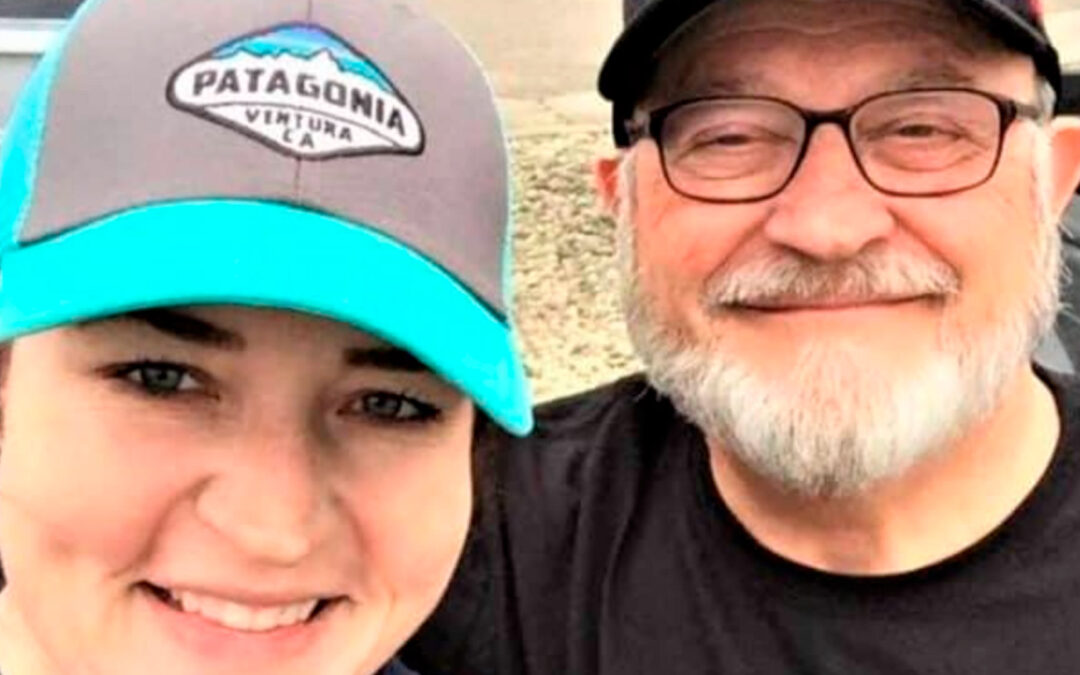
The family of a Pierre man is suing Walgreens, claiming its pharmacy mishandled a heart medication that caused an overdose that led to his death last year.
The lawyer for the family of John Stengle, 71, and a longtime advocate for the disabled, filed a complaint Dec. 10 in South Dakota Circuit Court in Pierre. No monetary amount is mentioned in the court documents except the statutory minimum of $75,000. Attorney Ben Novotny of Trial Lawyers for Justice in Decorah, Iowa, said the family is seeking about $10 million.
On Jan. 10, Walgreens asked a judge to move the case to federal court, arguing it has “original jurisdiction,” based on federal law.
Stengle’s widow, Karen, and their daughter, Nicole who lives in the Twin Cities, claim that a prescription for John Stengle for Amiodarone, a drug used to counteract serious arrhythmia of the heart (when the heart beats out of rhythm), was mishandled by Walgreens.
The drug was prescribed — correctly — to Stengle by Sioux Falls cardiologist Dr. Riyad Mohama on Feb. 28, 2018, Novotny says.
The doctor’s notes show he prescribed a 90-day regimen of the drug for Stengle, starting at two weeks at 800mg each day, then down 200mg every two weeks, “tapering off” the drug, and including a refill part way through the 90 days, Novotny told the Capital Journal on Tuesday.
But Novotny said the pharmacist and/or others at Walgreens, gave Stengle too many pills, did not include the fourth two-week period of the regimen, and restarted the regimen part-way through, going back up to the high levels of the drug, which can be toxic if not ingested correctly.
“It’s a tragic thing,” Novotny told the Capital Journal. “People like Mr. Stengle go home and take it exactly as they are told to do — his wife was actually helping him dispense the medication — and little do they know while they are doing that, he’s actually poisoning himself.”
Amiodarone is for serious heart arrhythmia and has possibly life-threatening side effects, experts say.
“It’s one that should be prescribed only with extreme caution,” Novotny said. “It’s a good drug when it’s used appropriately, but can be very bad when it’s used inappropriately.”
Novotny said the family is suing Walgreens and its pharmacy, but not the heart physician that prescribed the drug. The Stengle family alleges Walgreens improperly instructed Stengle and, effectively, overdosed him on the drug, leading to this death.
Stengle’s widow and daughter want to make sure not only their losses are addressed but also “to try to make sure things like this don’t happen to other people,” he said.
Walgreens’ attorneys in Minneapolis did not return calls for comment Tuesday.
Walgreens has also not yet responded to the details alleged in the Stengles’ complaint in state court, while currently seeking a change of venue to federal court.
According to the Stengles’ complaint in state court:
The drug is metabolized by the liver and if “the patient suffers Amiodarone toxicity, vital organs such as the liver, lungs and kidneys may become irreversibly damaged, leading to death.”
Dr. Mohama prescribed a 90-day regimen for Stengle to take the pills at a stepped-down level: two weeks of 800mg; two weeks of 600mg; two weeks of 400mg and two weeks of 200mg.
In its dosage instructions to Stengle, Walgreens did not include the two-week period of 200mg level, which the complaint calls “negligent conduct.”
“Walgreens then filled the prescription with approximately 500 Amiodarone pills, rather than the correct number of approximately 126 pills,” and “refilled the prescription long before the pills ran out” and “restarted the entire heavy-tiered dosing…,” according to the complaint.
“Mr. Stengle’s body, over the course of several months, suffered from Amiodarone toxicity. Over time, Mr. Stengle’s vital organs began to shut down, and he eventually suffered from multi-organ failure.”
“Mr. Stengle suffered a long, painful death witnessed by his wife and his daughter. On Feb. 1, 2019, Mr. Stengle suffered a premature and preventable death.”
Before his death, he “endured severe conscious mental and physical pain and suffering,” for which the Stengles seek damages.
His “untimely” death also deprived his estate “of expected accumulations had John Stengle lived to his normal life expectancy.”
Stengle’s widow and daughter say they suffered the loss of his care and support as well as the expenses of his funeral. Stengle’s funeral was held at Lutheran Memorial Church in Pierre.
According to his obituary published in the Capital Journal, Stengle was born in Des Moines and grew up in Sioux Falls. He lived in Watertown, South Dakota, where he met his wife and their daughter was born. He spent his latter years in Pierre working as an advocate for people with disabilities, as director of The Arc of South Dakota. He was invited to the White House in 1990 to witness the signing of the Americans with Disabilities Act. In 2001, he was hired as executive director of the Housing and Redevelopment Commission of Pierre.
“He was a good, good dude,” Novotny said. “He played guitar in his church band every week. He had a lot of life to live and to give to his community and to his family going forward.”
Throughout the United States, winter brings snow and ice to streets and sidewalks. Homeowners are responsible for clearing and sanding/salting areas on their property. City and town streets are maintained by state and local crews. When you’re driving or walking on snowy or icy streets, you do have to use caution, but it’s fair to assume the streets will be safe to use. What if they’re not? What happens if you are injured while using a town or city street?
You Have Several Things to Consider
This is a popular question in the winter and one that has to be carefully considered. Depending on your state/town/city’s regulations, the person responsible for maintaining streets and sidewalks may vary. For example, in a town, a state route or highway is often maintained by the state, but town roads are the town’s responsibility. On a private road that’s shared by neighbors, the association may be responsible for street maintenance. In some areas, homeowners must tend to the sidewalks in front of their home and their driveway. They must ensure that they do not blow or shovel snow into the street while doing so.
Keeping that in mind, you next have to look at whether the responsible party was negligent. Was there time for that party to get out and get the street cleared and sanded or salted. If the road crew is handling miles and miles of roads, it’s expected that it will take the truck time to do one area and move to the next. Even if the crew was lax at clearing or deicing the street you fell on, there are other factors. Were you in boots designed for walking in wintry weather or were you wearing shoes with no tread? If you were driving, did you have good tires? Were you driving at a reasonable speed for the conditions?
If you’re reasonably certain someone was negligent, you have to decide who it was. It may not be the town, city, or state. Private streets in a condo, apartment, or shopping complex are maintained why whoever the association or property owner hires. This is the person you’ll file a claim against. If you were walking and another driver lost control and hit you, the driver may be the negligent party. Bald tires, speeding, or distracted driving are all possible factors. You’d file a claim against that driver.
Situations Where Negligence is Clear
Proving negligence is key to filing a personal injury case after a crash on icy or snowy roads. Negligence has to be clear. The general assumption is that driving or walking on wintry roads comes with risk. If you opt to go out despite that risk, you’re to blame. There are exceptions. Here are a few examples.
A homeowner has his driveway paved and it’s not set up to drain correctly. Melting snow and rain run right down the driveway and into the road. During the night, that melting snow and rain freeze and form black ice. The homeowner could be liable for your crash because the paved driveway was not designed correctly.
A private plow pushes snow across a roadway and into a ditch. It leaves a mound of snow across the road that causes your car to drift and hit a car coming the other way. That private plow driver could be liable. Some towns and cities have strict laws against pushing snow from a driveway across the road, and that would help back up your claim.
It snowed two days ago. Traffic has packed down the snow, but the town still hasn’t come out and taken care of the road. The packed snow is icy and several cars have slid off. Despite complaints, the town still hasn’t spread sand or salt to give cars better traction. If this is the case, you could have a valid case against the town.
What If You Still Want to File a Complaint?
If you’re in a crash with another vehicle, whether it’s on foot or in your car, have the police file a report. You’ll want that paperwork when you file a claim with your auto insurance. If the other driver was all or partially to blame, your insurance company will advise you on what happens next.
If you’re a pedestrian, you’ll file a claim with the driver’s auto insurance company. If that driver doesn’t have auto insurance, you need to file a personal injury claim against the driver as quickly as possible. You don’t want to have medical bills stacking up that you can’t afford without restitution. Your health insurance may absorb some of the costs in the meantime.
Keep track of all the paperwork. This includes medical bills, reports, and witness statements. If you have photos of the road conditions, keep those with the rest of the paperwork. The more evidence you have proving that someone was negligent at maintaining the roads, the more success you’ll have.
As for filing a personal injury claim when you’re injured on snowy or icy roads, it’s best to ask an expert. Proving negligence is difficult, especially if you’re inexperienced. Don’t take chances. Talk to an experienced personal injury attorney to see if you have a case. The attorneys at Trial Lawyers for Justice have an exceptional winning record with more than 300 successful jury verdicts. They’ve secured a total of more than $1.5 billion for the injured and their families. It doesn’t cost you anything to talk to an attorney. Call 866-854-5529 now.
An Iowa family is suing a Nebraska-based nonprofit after a nonverbal 14-year-old died in the organization’s care and an autopsy found possible, but unconfirmed, signs of sexual abuse.
The lawsuit raises issues with the staffing, communication and training at Mosaic — a residential medical care company with a location in Forest City — and the lack of action by health care professionals leading up to the 2018 death of Samantha Wellik.
Wellik, diagnosed with multiple conditions including asthma and cerebral palsy, was pronounced dead Jan. 23, 2018, after several Mosaic staffers raised concerns about changes in her health, according to the lawsuit and a report from the Iowa Department of Human Services.
Samantha Jayne Wellik, 14, shown in an undated family photo. Wellik, who was diagnosed with cerebral palsy, died in January 2018 while living at the Mosaic care facility in Forest City. Her family is now suing the organization and several employees who worked with “Sami.” (Photo: Provided photo/Special to the Register)
That DHS child abuse report shows that at least three layman-type employees told supervisors that Wellik needed medical attention late on Jan. 22. An on-call nurse practitioner told workers to give the girl Tylenol and water and that she’d check on the teen in the morning.
A Mosaic employee sat in the girl’s room that evening, doing homework and talking on her cellphone, the lawsuit states. That worker was not trained to do CPR once she noticed breathing problems.
Investigators, after interviewing those working while Wellik died, determined the girl was denied critical care that night, according to the DHS report. Ben Novotny, an attorney with Trial Lawyers for Justice who is representing the Wellik family, said Wellk’s death was one of the worst neglect and abuse cases he’d seen.
“(Her death) was heart-wrenching, especially when you think that things are fine and then to find out they weren’t fine for quite some time,” Josh Wellik, Samantha’s father, told the Register. “It’s really hard when you have a child that cannot communicate, so she can’t tell me, ‘Dad, I’m hurting,’ or, ‘I don’t feel good.’
“To me, there should have been some way of the staff knowing that she wasn’t well for several months so something could’ve happened to prevent the outcome.”
Wellik died from “complications of ruptured bowel in the setting of Fournier gangrene,” according to the medical examiner’s report. The manner of death was undetermined.Get the News Alerts newsletter in your inbox.
Get alerted to the latest stories to stay on top of the news.Delivery: VariesYour Email
The lawsuit seeks punitive damages from Mosaic. A spokesman for the organization said Mosaic, which says it supports 4,500 people in 11 states, was reviewing the suit, but could not yet comment.
Josh Wellik said it “blew him away” to learn his daughter had died. Samantha had lived at Mosaic for more than five years, and he was not aware of any pressing medical concerns.
He said the grief of losing his daughter was compounded by the medical examiner’s finding that the girl had injuries consistent with sexual abuse. The examiner noted the damage could have been done by “forceful” enemas, though fluid that appeared to be semen was also found in the girl, Wellik was told.
“I was continuously following up once I heard (they were doing a) rape kit,” he said. “So … then they said there was a trace of semen but there was no DNA found, so they couldn’t come to a conclusion that that’s what it was.”
The state medical examiner’s office did not respond to questions about the possibility of sexual assault.
What happened the night she died?
Numerous Mosiac employees were in contact about Samantha Wellik’s condition late on the night of Jan. 22 and into the early morning hours of Jan. 23, according to a DHS Child Abuse Assessment Summary. Wellik lived with another nonverbal resident at 105 Kelly’s Court, an intermediate care facility in Forest City.
The DHS report details escalating concerns raised by several employees over seven hours, beginning at about 10:30 p.m. on Jan. 22. Those employees said they initially observed and reported that Wellik had severe diarrhea, was breathing differently and appeared to be in pain or uncomfortable.
One employee later noticed strange noises from Wellik’s abdomen as the girl moaned and screamed and had bowel movements for 45 minutes straight. By 3 a.m., the girl was “panting” and restless. Another employee reported that the girl’s stomach was hard and her toes were blue.
But despite being contacted by caregivers and supervisors throughout the night, the on-call licensed practical nurse (LPN) did not attend personally to Wellik. Instead, over numerous calls, the nurse instructed employees to give the girl Tylenol, to give her water and tuck her in, and to apply calming cream to soothe Wellik’s pain and bleeding from her repeated bowel movements. The nurse said Wellik was probably getting sick and that she would check on her the following day.
Wellik’s monitor in those early morning hours noticed when the girl’s breathing slowed, but she thought the girl was at last settling down and going to sleep. The employee watched as Wellik gasped, then exhaled.
“She was watching her breath and then there was no breath out,” according to the DHS report.
The girl stopped breathing around 6 a.m., and the panicked employee called a coworker and then the on-call nurse, who told her to call 911, DHS said in its report. Shortly after, the nurse and other supervisors ran to Wellik’s room but were unable to revive her.
The nurse told investigators that Wellik had a history of issues with bowel movements and did not have a fever, so she did not think the teen needed immediate medical attention, according to the DHS summary.
She also said her instructions throughout the night were standard for someone who didn’t have a fever and was “fussy,” “irritable” and “stuffy.” A program manager told authorities that when she saw Wellik, the girl was whining but had no fever, vomiting or labored breathing.
Samantha Jayne Wellik, 14, shown in an undated family photo. Wellik, who was diagnosed with cerebral palsy, died in January 2018 while living at the Mosaic care facility in Forest City. Her family is now suing the organization and several employees who worked with “Sami.” (Photo: Provided photo/Special to the Register)
DHS: Teen was denied critical care
In its report, DHS found Mosaic at fault in Wellik’s death by not providing critical care. It identified staffing shortages and a lack of training as contributing factors.
But DHS also said the medical staff that treated Wellik in the months before she died —as well as workers changing and bathing her — should have noticed a prolapsed anus and trauma to the vagina, as well as intense “diaper rash.”
Novotny says that experts he’s consulted say that the infections that killed Wellik were a product of fissures near her bottom. The tearing allowed stool to get into her body cavity, which caused a deadly case of Fournier’s gangrene. The infections were present for as long as two months, the attorney was told.
“My main feelings were, I guess, grief and sadness, because I really didn’t know what happened,” Josh Wellik said. “That was probably the toughest part of it; the month of waiting to finally find out it was something that, I feel, could have been prevented.”
High turnover, sleeping on the job
On the night of Jan. 22, 2018, and into the morning hours, snow moved across northern Iowa. One Mosaic supervisor told DHS that the facility was understaffed that night, and the weather further threw off workers’ schedules.
Issues of understaffing were rampant at Mosaic. The organization was forced to close two of its Forest City homes later in 2018 because it wasn’t able to staff them properly, according to a Mason City Globe Gazette story.
Mosaic did not respond to questions from the Register about staffing levels.
A Mosaic spokeswoman told the Gazette in December 2018 that the lowest number of open positions the company had in Forest City was at about 50. However, in recent months, there have been close to 70 open positions in Forest City.
In its report, the DHS called Mosaic “understaffed” and its employees “undertrained.”
“At the time when I (found out about Mosaic), things were a lot different than they were when (Sami) passed,” Josh Wellik said. “I got to know the old manager and the people who worked there, but when she passed, it was not the same staff.”
Wellik said some people who worked with his daughter reached out after she died, but he was upset that administrators did not communicate with the family, which lived nearby, more.
Many employees who help feed and clean Mosaic residents are not medically trained, Novotny said.
Some employees told DHS investigators that Mosaic’s daily operations were fine; others were frustrated by the difficulties in contacting medical staff, the constant understaffing and the general lack of training for lower-level workers.
One of these employees told investigators that she did not know what a CPAP machine was or that Samantha Wellik used the device for her asthma. The machine was later found in a closet.
“This place is notorious for being understaffed, and this night was one of those times where they’re understaffed,” Novotny said. “One person said they were understaffed because they’d fired a bunch of people because they were sleeping on the job.”
A supervisor told investigators that several changes were made because of employee conduct, including napping while on shift. An employee said two people typically would work one house during third shift, but fewer were available because workers had been fired and not yet replaced.
Josh Wellik said a manager he liked left Mosaic a couple of years before his daughter died, and that since then, there was a “revolving door” of new employees.
“Once she left, it just seemed like there was a lot of turnover, as far as the staff,” he said. “It didn’t really have a family-friendly or home environment toward the end there. There just wasn’t a lot of consistency.”
Sexual abuse ‘cannot be ruled out’
Questions about staffing and protocols aside, Josh Wellik said the most upsetting aspect of his daughter’s treatment and death is the possibility of sexual abuse.
“Originally, they told me they were doing rape kits, so then, of course, as a father, anger sets in,” Josh Wellik said. “It was inconclusive, but to even know that there was a chance that something like that could have happened, that’s enough to wreck a father.”
The doctor who performed the autopsy noted “apparent trauma” to the 14-year-old’s vagina and damage to her rectum. Her hymen was “not visible,” according to the report.
The cause of the injury is not known, but “a component of trauma (e.g. sexual assault and/or forceful enemas) cannot be excluded,” according to the autopsy.
Samantha did regularly receive enemas, the medical staff told investigators.
But that would not explain the material believed to be semen found in the girl’s body. Wellik said he was told by a person in the medical examiner’s office that substance appeared to be semen, but no DNA was detected.
No criminal charges have been filed against Mosaic in Winnebago County, according to online court records. Novotny said his client is hopeful the lawsuit can bring accountability to Mosaic, among other things.
“You can’t change the past. So he really has three things he wants to accomplish,” Novotny said. “No. 1, justice for his daughter; No. 2, making sure this doesn’t happen to anybody else; and No. 3, seeing if the DA will take a second look at this.
“If we need to protect anyone, this is the patient population we need to protect.”
Public transportation methods – subways, buses, trains, and commuter ferries – are safer than being in a car. That doesn’t mean injuries aren’t possible. Bureau of Transportation provides a lot of statistics for the number of accidents each year that injure workers, passengers, and bystanders or other drivers.
Bus crashes in 2017 totaled 67,000. It’s important to note that the BTS doesn’t break it down by school bus, tour bus, or public transportation. Train accidents led to just over 10,300 accident reports, while transit accidents were lower at 7,080. Finally, some of the 6,545 waterborne accidents affected people taking public ferries.
What Are Common Carrier Laws?
By definition, a carrier is a company that’s responsible for the transport of people or goods. They include bus companies, ferries, commuter trains, taxis, subways, etc. Part of the job is for that carrier to transport the “goods” safely. Until the people or items reach their destination, the carrier must do everything possible to keep them safe.
There are exceptions to the rule. Accidents caused by an act of nature, terrorism/crime, defects, or fraud are exempt from liability. For example, if a freak blizzard caused a bus to slide off the road, the bus company isn’t liable for acts of nature.
Despite the liability laws, you must be able to prove negligence. If you’re on a bus and the driver slams on the brakes to avoid a drunk driver who is about to run a stop sign, the driver is actually taking responsible, preventative action. If you were thrown out of your seat, the driver of the bus was not negligent.
Let’s say you’re on a commuter train that goes too fast around a curve. The investigation uncovers the fact that the railroad engineer fell asleep and wasn’t controlling the train. The engineer shouldn’t have been sleeping and is liable.
If you believe the public transportation company or driver was negligent, there are a few things you need to do. Go through these steps to make sure you have the information you need if you decide to proceed with a personal injury lawsuit.
Allow Doctors to Examine You
If you’re injured while using public transportation, you have rights if you’re injured through no fault of your own. The very first thing you need to do is make sure you’re okay. Your well-being is the most important thing to take care of. Ask to be seen by paramedics. If that’s not possible at the time, go to an urgent care clinic or hospital emergency room on your own.
If you do decide to sue the public transportation company, you want paperwork from the doctor or hospital that shows you put your health and safety first. You didn’t wait days or weeks to get checked out, which can suggest the injury happened at another time. You prioritized your well-being and followed the doctor’s instructions.
Keep track of the medical expenses that build up. If you need physical therapy, attend those appointments and keep track of those bills, too. You’ll want to get your expenses covered by the responsible party. If you miss work, get a letter from your employer that lists your hourly wage or salary and normal hours. Get a note from your doctor that details how long you will be unable to work.
Talk to Authorities
Talk to the authorities who investigate the crash. Make sure you get an officer’s name and contact information. You’ll want to be updated on the investigation to learn how and why it happened. You’re going to share your account as a passenger. It’s okay to focus on your physical health before you give your account. If you’re in pain and struggling to stay focused, tell the authorities you want medical care first.
You may want to get names and contact information for any witnesses and other passengers. Get photos of your injuries, damaged personal items, and the accident scene. If you’re injured, don’t prioritize this. You can ask a friend or witness to do this for you. When you are well enough, you can call the officer you spoke to and ask for updates.
Seek Advice From a Personal Injury Attorney
There are limitations on how long you have to file a personal injury lawsuit. While it’s generally two years in Iowa, rules may change if you’re suing a government agency. This is why it’s important to seek a free consultation with an expert in public transportation injuries.
Trial Lawyers for Justice specialize in personal injury law. Call them to discuss your bus accident, train accident, or injuries received in a public transportation accident. TL4J’s Iowa attorneys offer assistance via online chat or by calling 1-866-854-5529.
Forbes estimates that about 17,000 medical malpractice lawsuits are filed each year. The majority of the claims are against doctors practicing in a high-risk specialty, though 3 out of 4 doctors in a low-risk specialty will face a malpractice claim at some point during their entire career.
There are many misconceptions involving malpractice. A general assumption that people who sue their doctors are only in it for the money. These are five of the things you never knew about medical malpractice.
#5 – Malpractice Cases With a Positive Verdict Often End Up With Reduced Awards
In a study of 198 cases where the jury awarded $1 million or more, only 1 out of 4 plaintiffs actually received the full award. Many were reduced by judges or in appeals by an average of 57%. Additional studies were done and found that 44% of malpractice cases in New York, 25% in California, and 20% in Florida were lowered after the verdict.
#4 – Malpractice Cases Can Take Years
If you talk to the medical professional and don’t get the treatment or response you feel is fair, talking to an attorney is your next step. The attorney will look at your medical records and complaint and determined if you have a valid complaint. If you do, the attorney looks for a medical expert who has the necessary expertise to be a witness.
Negotiations may occur with the medical professional or practice at this point. If not, the lawsuit is filed and discovery begins. As arguments are offered and evidence is revealed, the plaintiff’s and defendant’s lawyers may start negotiations to reach a settlement. If not, the case goes to trial.
According to a 2018 article from the American Association for Physician Leadership, it takes about 16 to 17 months to file a lawsuit and then 27 to 28 months to reach a verdict or settlement. It’s can be a long, arduous process.
#3 – Only 13% of Patients Who Experienced Malpractice Actually Filed a Claim
An Emory University law professor took a look at malpractice victims in 2014. She found that 95% of them had a hard time finding attorneys willing to take their case. People don’t understand their rights when a doctor, pharmacist, or nurse makes a mistake or is negligent. They don’t understand that they can file a claim months after the improper care.
#2 – A Maximum of 1% of all Malpractice Victims End Up Winning Their Case
In a study released by Clinical Orthopaedics and Related Research, 20 years of malpractice results found that medical professionals win 80 to 90% of cases with weak evidence of malpractice, 70% of cases with reasonable evidence of malpractice, and 50% of cases with strong evidence of malpractice.
Even when the evidence against the medical professional is strong, the victims don’t often win a favorable verdict. In fact, the New York Law School’s Center for Justice & Democracy reports that no more than 1% of malpractice victims will win a favorable verdict.
#1 – Studies Find That Very Few Malpractice Claims Meet the Definition for Being Frivolous
In 2006, Harvard released a study regarding medical malpractice claims. Of the 1,452 claims, more than 90% had a clear physical injury resulting from mistreatment, negligence, or mistake. Of those claims, 8 out of 10 cases showed severe injuries resulting in disability or death. Only 0.4% of medical malpractice claims didn’t show evidence of an injury related to treatment.
In National Center for State Courts’ 2017 data, only 4.04% of all civil and court cases involved medical malpractice. These cases are not in the majority.
An Expert Can Help You Understand Your Rights
Don’t let the media or statistics keep you from seeking justice. If you or a loved one has been harmed by medical malpractice, don’t give up hope of winning your case. Instead, be selective when it comes to choosing a personal injury attorney. Look for a law firm that specializes and has a strong track record for winning verdicts or settlements in malpractice cases.
Trial Lawyers for Justice specialize in medical malpractice. TL4J’s attorneys helped a family win more than $74 million after an infant was injured during birth. Other malpractice victims won $3.7 million and $16.4 million in malpractice verdicts and settlements. That’s just a small number of the clients TL4J has helped. You could be next.