View the entire article at Daily Journal

Toxic tort cases where plaintiffs’ injuries arose decades ago are notoriously difficult to prove and win. But attorneys from Ernst Law Group APC and Trial Lawyers for Justice — enduring what one called “scorched earth litigation” from a deep pockets defendant now owned by Chevron Corp. — prevailed and obtained a $63 million jury award for a man who developed cancer more than 25 years after living over an old oilfield sump pit.
The award included $41 million in punitive damages. Making matters harder for the plaintiff’s lawyers was the complication that their client’s multiple myeloma was in remission at the time of the 23-day trial. Wright v. Union Oil Co. of California, 21CV00925 (S. Barbara Sup. Ct., filed March 8, 2021).
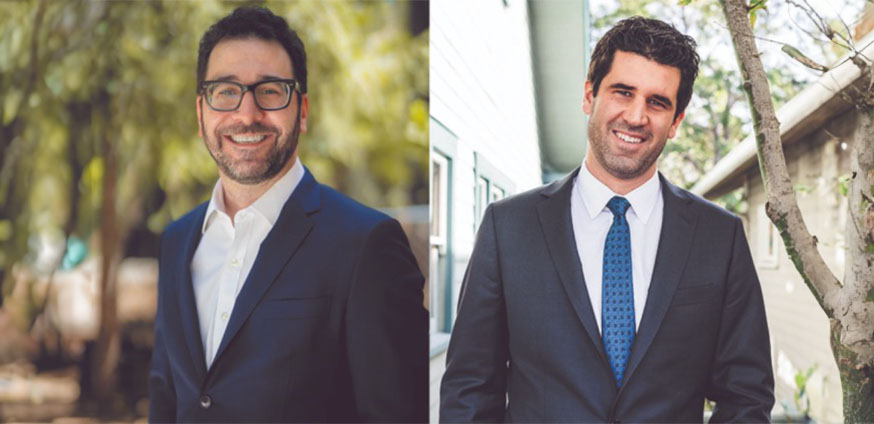
“We had to work for our facts. They didn’t want to give us any discovery. They violated court orders,” said M. Taylor Ernst, the founder of San Luis Obispo’s Ernst Law Group, who brought on Trial Lawyers for Justice to try the case. Co-counsel Brian J. Ward, of Trial Lawyers for Justice’s Ventura office, said that along with seeking justice for client Kevin Wright, the team was motivated by a wish to document the history of the oil and gas industry’s abuse of California’s environment.
“And that’s what we did,” Ward said. “Going deep into the history books we found our client’s injury came at the epicenter of the industry that began in the 1890s in the Santa Maria oil fields. We treated the courtroom like a public square where we could expose an industry that has long ducked accountability here.”
Joining Taylor Ernst and Ward were Don A. Ernst and Terry J. Kilpatrick of Ernst Law Group and Erin L. Powers of Trial Lawyers for Justice. That firm’s Jakob Z. Norman of Bozeman, Mont., was also on the team. They faced off with defense lawyers from Alston & Bird LLP and King & Spaulding LLP.
At one point early in the trial the defense violated a court ruling they’d sought that barred use of the term “big oil.” Ward said, “So they started out by saying, ‘Who has a problem with big oil?” Superior Court Judge James F. Rigali asked the plaintiffs if they wanted a new trial. “We declined, based on our faith and pride in our case,” Ernst said.
He likened the trial to a war. “There was no mediation. There was no high low agreement. There was no settlement conference.” The defense offered $50,000 to end the case, he said. Cross-appeals are in progress.
Wright had lived on the contaminated premises for two years and was diagnosed 27 years later with a cancer known to be associated with benzene exposure. The defense denied everything, and the court excluded evidence that Chevron had made remedial efforts to clean the property in 2016.
The plaintiff team found old aerial photos of the oil field showing the location of a chemical sump pit the size of an Olympic swimming pool — “literally underneath our client’s bedroom,” Ernst said. After the trial’s liability phase, Ward said the team was uncertain about quantifying punitives. “But the jury found a way. They made it a million dollars for every year the place went without a cleanup.”
–John Roemer
View the entire article at Daily Journal

View the entire article at ABC 7 News Bay Area
South Carolina
University of Washington
Harvard University
College of Charleston, B.A., 2004
USC School of Law, J.D., 2008
Like doctors, lawyers have an oath. When I took the oath I pledged to my clients “faithfulness, competence, diligence, good judgment and prompt communication.” I also swore not to pursue any unjust lawsuit. The lawyer’s oath is not just a set of words, but a moral code. It is the code that guides my practice. Everyone who works with me shares my commitment. We are not just a law firm – we are a team.
Our job is to listen to your concerns, answer your questions, guide you through the process, and achieve the best possible outcome. We approach this task with a sense of urgency, and an eye toward results. As my staff and I often discuss, each moment in our office provides an opportunity to make a client’s life better. It is the reason we show up early, stay late, and devote our full resources to each case we accept.
Every day bad things happen to good people. Even the most upstanding and well respected members of our community are not immune from car accidents, work injuries, and fatal injury.
Unfortunately, we cannot represent every individual and family in need. I accept less than 10% of potential cases because I pride myself on truly getting to know my clients, their families, and their case. We meet clients in their homes so that we can best understand the losses and daily struggles an accident has caused. After a case ends, clients often become dear friends. It is to them and to all injured people that we have dedicated our careers.
Our mission to make South Carolina a safer, better place to live extends beyond our office walls. We have created scholarships for students, opportunities for children battling illness, and a weekly charitable effort known as Giving Tuesday. We also seek to uplift our profession and its ethical commitment by way of seminars, journal articles, and board positions.
My firm seeks to be an instrument of good for people with life-altering injuries and families dealing with a loss of life, as well as our larger community. We achieve our aims through hard work, selfless service, and a relentless commitment to justice.
South Carolina
University of Oregon, Political Science/Economics, B.S., 1998
USC School of Law, J.D., 2010
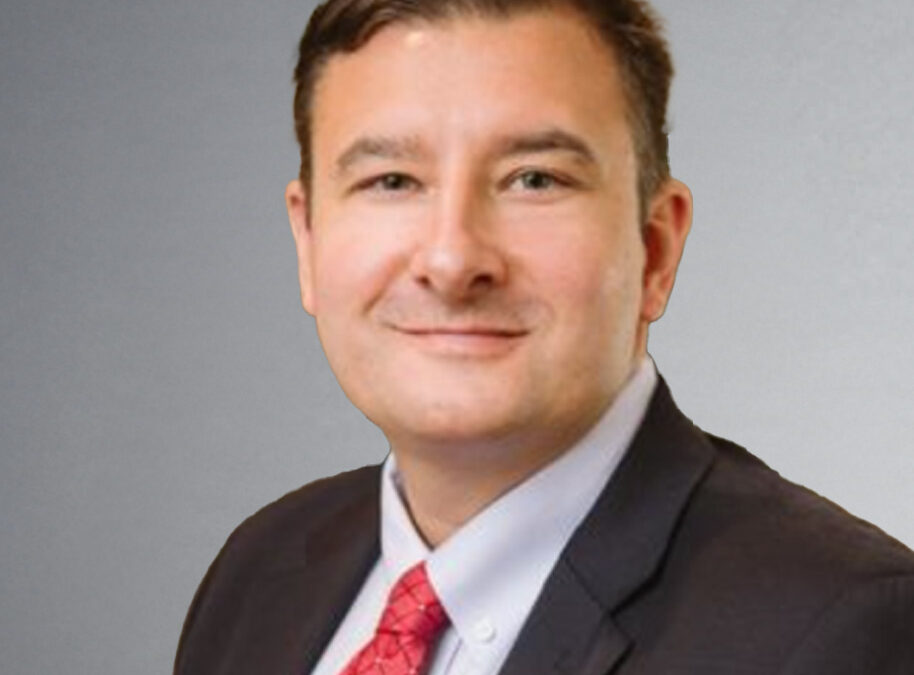
My first job as a lawyer was at a small firm in a small town. During this time, I served clients in a wide variety of civil and criminal matters and gained valuable experience in the courtroom. I enjoyed getting to know my clients and guiding them through the legal process. After nine years, I decided to join a much larger plaintiff’s firm. It was during this time that I had the opportunity to focus my practice on representing people that were severely injured. When I met Kenneth Berger and the opportunity to learn more about his firm, I knew that I found the right place for me to practice law. A close-knit group of lawyers who are passionate about serving their clients and the community.
When I am not practicing law, I am with my family. My wife Christie and I have a son, Gabriel, and a daughter, Eveliina and three dogs that keep us busy. We enjoy spending our time exploring the beautiful and unique places that South Carolina offers. Of special interest to us are the mountains of the upstate, where we enjoy hiking, camping and fishing. When not in the woods exploring, I enjoy reading and playing chess.
A jury in Washington state on Monday found that levels of polychlorinated biphenyls, or PCBs, at the school weren’t “reasonably safe” and awarded $73 million in compensatory damages and $784 million in punitive damages to two parents who volunteered at Sky Valley Education Center along with five former students, according to court filings.
The decision marks the eighth time Washington state juries have found that students, teachers and parents who spent time in the facility were harmed by exposure to PCBs used in fluorescent light fixtures. Jurors have
“Our clients would happily trade all the money they were awarded if they could get their health back,” Mike Wampold, one of the lawyers who represented the students and parents, said in an interview.
Bayer will appeal the verdict and pursue post-trial motions to reduce the damages awarded, it said by email. The company insists that the plaintiffs were not exposed to unsafe levels of PCBs. The stock was little changed in Frankfurt trading.
Bayer, which bought Monsanto in 2018 for $63 billion, has been dealing with a host of
Besides the $16 billion set aside to resolve Roundup cases, the German conglomerate faces mounting liabilities tied to PCBs, frequently found in electrical equipment. The compounds were banned in the US in 1979 after researchers found they posed a cancer threat.
Bayer’s top-end exposure in PCB contamination claims from US states and individuals could exceed $2.5 billion, according to
In the most recent Washington state case, a parent at Sky Valley school alleged PCB exposure caused her brain damage, while others in the case blamed the chemicals for neurological disorders and illnesses such as lupus, according to court records.
In the trial, Angela Bard, a volunteer at the school which her daughter Jessica attended, won a total of $119 million for her injuries. Jessica was awarded $127 million in damages.
Jurors found that Monsanto and Pharmacia, a related company, supplied PCB-laced products used in the school’s lighting system and failed to provide adequate warnings about the chemicals’ health risks, according to court filings.
The verdict was reported earlier by the New York Times.
Last month, a separate jury awarded workers at the Sky Valley facility $165 million in damages over their claims that the PCBs caused their cancers and brain injuries. The plaintiffs included six teachers and a custodian.
The most recent case is Bard v. Pharmacia, 21-2-14305, Washington State Superior Court for King County (Seattle).
View the entire article at Bloomberg Law