


How Does A Car Crash Settlement Work?

How Does A Car Crash Settlement Work?

Any time you’re in a car crash with damage to yourself, your vehicle, and/or someone’s personal property, you’ll be placing a claim. If you’re responsible for that crash, your auto insurance company pays settlements to others and, most likely, repairs or replacement of your car. What if it’s not your fault? The same process applies. You file a claim against the other driver’s auto insurance.

You’ll be reimbursed for the cost to replace or repair your car. Your medical bills are covered by insurance. You can also get paid for the time you miss from work or school. Payments for your pain and suffering are also included in most settlements.

Things to Do at the Scene

After you’re in a vehicle crash, you or someone at the scene will call the police. You may not see a lot of damage to your car. It’s best to call the police and get a report started. The smallest amount of damage can be far costlier to repair than you might expect.

While you wait for police to arrive, take photos off the damage to any vehicles and personal property like fences and mailboxes. If you’re badly injured, you can usually get photos from the police later.

You should also ask to see a doctor. Again, you might feel fine, but shock after a crash often gets adrenaline racing. That adrenaline can mask pain. It’s best to be seen and learn there is nothing wrong than discover you have serious injuries hours later.

The Crash Investigation

Police will do their investigation and issue a police report. The insurance company will also investigate. They will look at the damage to your car, the crash scene, your medical reports and bills, the police report, witness statements, and the crash location.

In addition to those pieces of evidence that are used to determine the settlement amount, the insurance company often consults with crash reconstruction experts and engineers who can determine if road conditions or malfunctions in a vehicle were partially or fully to blame.

An appraisal of your car’s value is calculated. The value may be based on the cost to repair the car to its state prior to the crash or the Kelley Blue Book value at the time of the crash. The question for the insurer is if it’s cheaper to repair or replace your car.

If you’re going to have to replace your car or get it repaired, you’ll likely need a rental car in the interim. The cost of a rental car may also be part of the insurance claim.

Finally, the insurance company will find out how much time you had to miss. If you needed a week of rest after a head injury and missed five days of work, that will be considered. If you missed a day of college classes, the cost of the classes is also tallied.

The Settlement

When the insurance company has looked over all the evidence, you’ll often be offered a settlement. If you accept it, you’ll be asked to sign paperwork releasing the driver and insurance company from future claims. What happens next depends on the actual ownership of your car. If you hold the title, you\’ll have to turn that over to the insurance company if the car was declared a total loss. You receive your payout when you present the title. After that, you’ll be rushed to use that money to get a replacement car.

If the car is being repaired, the insurance company may pay the mechanic directly. If you were able to drive your car after the crash, you may get the check and have it repaired at your convenience.

If there was still an active loan or lease on the car, the financial institution is part of the process. If the car is being repaired, the repairs have to be made, so you’ll never see the money. If the car was totaled, the insurance payoff is given to the bank to pay back the remainder of the loan or lease.

Is the Settlement Offer Ideal?

Sometimes, it’s not to your advantage to deal directly with the insurance company. Don’t rush to get the money. It may not be the best offer in your situation.

You could have injuries that require years of medical care. Traumatic injuries can lead to PTSD that requires months and even years of counseling. The amount you’re offered in the settlement may not be enough to really replace the car you’ve just lost. This is when you need to talk to a law firm that specializes in personal injury lawsuits.

Isn’t it in your best interest to talk to a trial lawyer? Remember that another driver’s auto insurance company is working for the other driver. You may be offered a fair car crash settlement, but it’s not always the case. Insurance companies may offer a low-ball settlement to see if you’ll take it.

A free consultation with a personal injury lawyer helps you be certain the settlement is in your best interest. Talk to the experienced legal team at TL4J to be sure you’re getting the full compensation you deserve.

I Was Hit by a Commercial Truck. What Should I Do?

I Was Hit by a Commercial Truck. What Should I Do?

Passenger vehicles don’t weigh anywhere near as much as a commercial truck. Commercial trucks include cement mixers, dump trucks, snowplows, flatbeds, garbage trucks, refrigerated trucks, tankers, and tractor-trailers. All of them can be extremely heavy whether they’re empty or packed with goods. The average weight of a passenger car is around 1.5 tons. A passenger truck is around 3 tons. A dump truck or snowplow can weigh up to 28 tons. Your injuries can be severe.

If you’re hit by a commercial truck, you need to know what to do next. Even if steps to take seem to be common sense items, anxiety can make it very hard to think things through. We can help you understand your rights and responsibilities.

Your Well-Being Matters Most

Before you start worrying about talking to your insurance company, take care of yourself. You likely have noticeable injuries and will be taken to the hospital by ambulance. If you weren’t seriously injured, you may not feel it’s important to get checked out by a medical professional. You still need to do this. Auto insurance pays for your medical bills, so there’s no reason to skip this step.

You could have a concussion. There could be contusions that need medical attention before a brain bleed or brain swelling puts your life at risk. Internal injuries and bleeding can also occur slowly at first. You don’t realize the severity because you’re filled with adrenaline that’s masking the pain. Go to the hospital or, at the very least, go to your doctor or an urgent care office. It’s better to find out you’re not injured than to be at home and have an injury worsen. It also starts a chain of evidence regarding medical expenses if you need to sue the trucking company for your injuries.

When you get home, schedule follow-up appointments if they were recommended. Take medications as recommended. Do what the doctor said to do. If the doctor told you to stay home for a few days, call your boss and explain how long you’ll be out. Keep track of your lost wages until you’re able to return to work. If you need a doctor’s note to prove to your boss that there’s an issue, ask the doctor to provide one. The more paperwork you have to prove your claims that the accident disrupted your life, the easier it is to get a favorable settlement.

Get Photos if You Can

If you’re well enough at the scene, take photos and get witness names and contact information. This can help you in the long run. If you have a dashcam, make sure the footage is recorded and have it sent to your email as a back-up. You may find witnesses also have dashcam footage and can send you a copy.

You may not be able to get photos. It’s okay. The investigating officer will take photos during the investigation. These photos will be part of the accident report. You can always ask for copies when you’re getting a copy of the accident report.

Make Sure an Accident Report is Filed

Police should have been at the scene. If you didn’t get the investigating officer’s name and badge number, call the station to get this information. Your insurance company is going to need it for the accident claim. If the police were not called to the scene, you should go fill out an accident report at the station or see if you can file one online.

To fill out the accident report, you need to have the other driver’s license number, contact information, VIN, and insurance information. Have the names and contact information for other witnesses. Answer the questions on the report and stick to the facts. Don’t accept fault and don’t apologize. Get a copy of the accident report after you’ve filled it out.

Call the Insurance Company

At home, you need to call the insurance company. Depending on your insurance agency, you may be able to start a claim online. This will be easier if you’re injured and don’t want to be stuck on the phone for a while.

You need to share the details of the accident, the police officer’s name and badge number, the accident report number, witnesses’ contact information, and the other driver’s information. If the insurance adjuster asks for a written statement or to record your statement, do not agree to this until you talk to an attorney that specializes in truck accidents.

After you file a claim with your insurance adjuster, that agent usually talks to the other insurance company to get things started. The other driver’s insurance adjuster may call you. Again, don’t feel that you have to allow him/her to record what you say and don’t agree to anything without first talking to an attorney. Insurance adjusters are looking for holes in your story to show that you could shoulder part of the blame. This can help them avoid having to pay for the full extent of the damages. You don’t want to get frustrated and say something they take the wrong way.

Why Do These Accidents Happen?

When you’re in a crash with a commercial truck, it’s important to understand it’s not necessarily your fault. The commercial truck driver’s insurance company may try to pin some or all of the blame on you but don’t let them. You have a lot of unanswered questions. Many truck accidents happen because the driver was not properly trained, was distracted with a phone or GPS, was tired, or was overloaded. Equipment failure and impaired driving are other leading causes.

You do not know the last time the truck was inspected. It could have blown a tire, had a brake issue, or had a problem with the steering. You don’t know how many hours the driver has been driving. If the driver you’re in a crash with has driven for too many hours or not taken enough breaks, the driver and his/her company would be to blame. State laws may alter these rules, but the Federal Motor Carrier Safety Administration limits drivers to these two key rules:

  1. Drivers cannot work more than 14 hours total without a minimum of 10 consecutive hours spent off duty. Of those 14 hours, only 11 of them can be spent driving the commercial truck.
  2. If a driver has reached 60 hours of work in 7 consecutive days or 70 hours in 8 consecutive days, the driver must take at least 34 hours off before starting another 7 or 8-day schedule.

In many of these crashes, both the truck’s driver and the company are at fault. The driver may have been at the wheel, but the trucking firm may have skipped routine inspections to save time and money. If a part on the truck is defective, it could be the fault of the truck or parts manufacturer, too. This is why it’s important to hire an attorney who specializes in truck accidents and understands the liability laws regarding these crashes.

Trial Lawyers for Justice is easy to reach and has the expertise you need at this challenging time. Our attorneys specialize in truck accidents. If you’d like to schedule a free consultation, we’re happy to find a time that’s convenient for you. Call our toll-free number 866-854-5529, email us, or access live chat. We’re here for you 24/7.
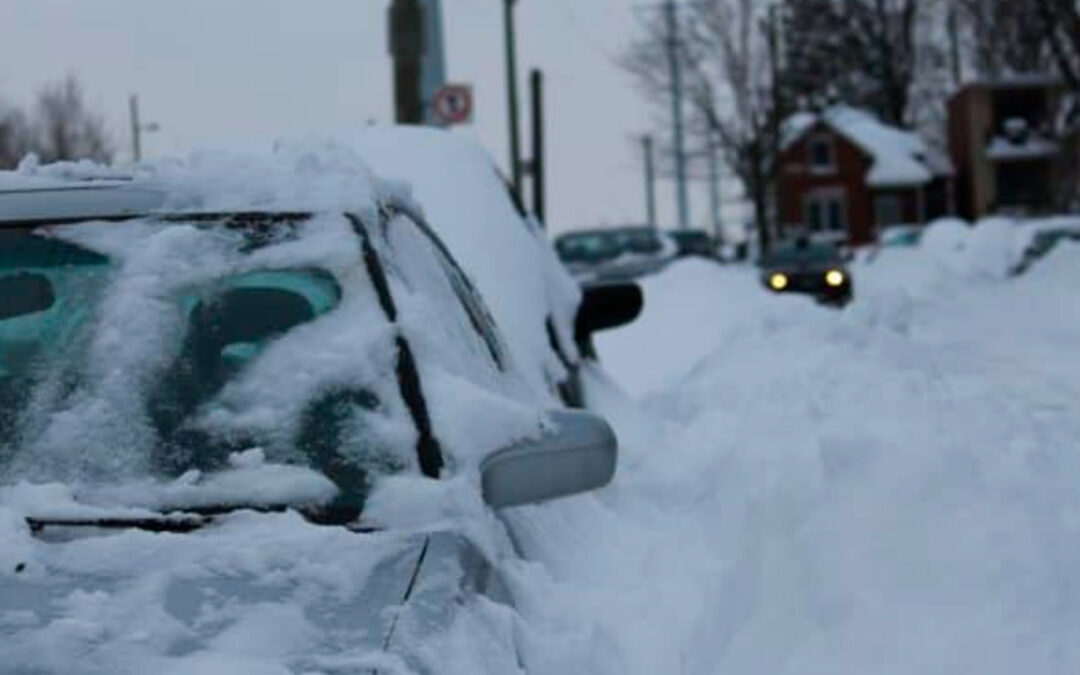

Can I File a Lawsuit if I’m Involved in a Crash Due to Snow or Ice on a Street?

Can I File a Lawsuit if I’m Involved in a Crash Due to Snow or Ice on a Street?

Throughout the United States, winter brings snow and ice to streets and sidewalks. Homeowners are responsible for clearing and sanding/salting areas on their property. City and town streets are maintained by state and local crews. When you’re driving or walking on snowy or icy streets, you do have to use caution, but it’s fair to assume the streets will be safe to use. What if they’re not? What happens if you are injured while using a town or city street?

You Have Several Things to Consider

This is a popular question in the winter and one that has to be carefully considered. Depending on your state/town/city’s regulations, the person responsible for maintaining streets and sidewalks may vary. For example, in a town, a state route or highway is often maintained by the state, but town roads are the town’s responsibility. On a private road that’s shared by neighbors, the association may be responsible for street maintenance. In some areas, homeowners must tend to the sidewalks in front of their home and their driveway. They must ensure that they do not blow or shovel snow into the street while doing so.

Keeping that in mind, you next have to look at whether the responsible party was negligent. Was there time for that party to get out and get the street cleared and sanded or salted. If the road crew is handling miles and miles of roads, it’s expected that it will take the truck time to do one area and move to the next. Even if the crew was lax at clearing or deicing the street you fell on, there are other factors. Were you in boots designed for walking in wintry weather or were you wearing shoes with no tread? If you were driving, did you have good tires? Were you driving at a reasonable speed for the conditions?

If you’re reasonably certain someone was negligent, you have to decide who it was. It may not be the town, city, or state. Private streets in a condo, apartment, or shopping complex are maintained why whoever the association or property owner hires. This is the person you’ll file a claim against. If you were walking and another driver lost control and hit you, the driver may be the negligent party. Bald tires, speeding, or distracted driving are all possible factors. You’d file a claim against that driver.

Situations Where Negligence is Clear

Proving negligence is key to filing a personal injury case after a crash on icy or snowy roads. Negligence has to be clear. The general assumption is that driving or walking on wintry roads comes with risk. If you opt to go out despite that risk, you’re to blame. There are exceptions. Here are a few examples.

A homeowner has his driveway paved and it’s not set up to drain correctly. Melting snow and rain run right down the driveway and into the road. During the night, that melting snow and rain freeze and form black ice. The homeowner could be liable for your crash because the paved driveway was not designed correctly.

A private plow pushes snow across a roadway and into a ditch. It leaves a mound of snow across the road that causes your car to drift and hit a car coming the other way. That private plow driver could be liable. Some towns and cities have strict laws against pushing snow from a driveway across the road, and that would help back up your claim.

It snowed two days ago. Traffic has packed down the snow, but the town still hasn’t come out and taken care of the road. The packed snow is icy and several cars have slid off. Despite complaints, the town still hasn’t spread sand or salt to give cars better traction. If this is the case, you could have a valid case against the town.

What If You Still Want to File a Complaint?

If you’re in a crash with another vehicle, whether it’s on foot or in your car, have the police file a report. You’ll want that paperwork when you file a claim with your auto insurance. If the other driver was all or partially to blame, your insurance company will advise you on what happens next.

If you’re a pedestrian, you’ll file a claim with the driver’s auto insurance company. If that driver doesn’t have auto insurance, you need to file a personal injury claim against the driver as quickly as possible. You don’t want to have medical bills stacking up that you can’t afford without restitution. Your health insurance may absorb some of the costs in the meantime.

Keep track of all the paperwork. This includes medical bills, reports, and witness statements. If you have photos of the road conditions, keep those with the rest of the paperwork. The more evidence you have proving that someone was negligent at maintaining the roads, the more success you’ll have.

As for filing a personal injury claim when you’re injured on snowy or icy roads, it’s best to ask an expert. Proving negligence is difficult, especially if you’re inexperienced. Don’t take chances. Talk to an experienced personal injury attorney to see if you have a case. The attorneys at Trial Lawyers for Justice have an exceptional winning record with more than 300 successful jury verdicts. They’ve secured a total of more than $1.5 billion for the injured and their families. It doesn’t cost you anything to talk to an attorney. Call 866-854-5529 now.

5 Things You Never Knew About Medical Malpractice

5 Things You Never Knew About Medical Malpractice

Forbes estimates that about 17,000 medical malpractice lawsuits are filed each year. The majority of the claims are against doctors practicing in a high-risk specialty, though 3 out of 4 doctors in a low-risk specialty will face a malpractice claim at some point during their entire career.

There are many misconceptions involving malpractice. A general assumption that people who sue their doctors are only in it for the money. These are five of the things you never knew about medical malpractice.

#5 – Malpractice Cases With a Positive Verdict Often End Up With Reduced Awards

In a study of 198 cases where the jury awarded $1 million or more, only 1 out of 4 plaintiffs actually received the full award. Many were reduced by judges or in appeals by an average of 57%. Additional studies were done and found that 44% of malpractice cases in New York, 25% in California, and 20% in Florida were lowered after the verdict.

#4 – Malpractice Cases Can Take Years

If you talk to the medical professional and don’t get the treatment or response you feel is fair, talking to an attorney is your next step. The attorney will look at your medical records and complaint and determined if you have a valid complaint. If you do, the attorney looks for a medical expert who has the necessary expertise to be a witness.

Negotiations may occur with the medical professional or practice at this point. If not, the lawsuit is filed and discovery begins. As arguments are offered and evidence is revealed, the plaintiff’s and defendant’s lawyers may start negotiations to reach a settlement. If not, the case goes to trial.

According to a 2018 article from the American Association for Physician Leadership, it takes about 16 to 17 months to file a lawsuit and then 27 to 28 months to reach a verdict or settlement. It’s can be a long, arduous process.

#3 – Only 13% of Patients Who Experienced Malpractice Actually Filed a Claim

An Emory University law professor took a look at malpractice victims in 2014. She found that 95% of them had a hard time finding attorneys willing to take their case. People don’t understand their rights when a doctor, pharmacist, or nurse makes a mistake or is negligent. They don’t understand that they can file a claim months after the improper care.

#2 – A Maximum of 1% of all Malpractice Victims End Up Winning Their Case

In a study released by Clinical Orthopaedics and Related Research, 20 years of malpractice results found that medical professionals win 80 to 90% of cases with weak evidence of malpractice, 70% of cases with reasonable evidence of malpractice, and 50% of cases with strong evidence of malpractice.

Even when the evidence against the medical professional is strong, the victims don’t often win a favorable verdict. In fact, the New York Law School’s Center for Justice & Democracy reports that no more than 1% of malpractice victims will win a favorable verdict.

#1 – Studies Find That Very Few Malpractice Claims Meet the Definition for Being Frivolous

In 2006, Harvard released a study regarding medical malpractice claims. Of the 1,452 claims, more than 90% had a clear physical injury resulting from mistreatment, negligence, or mistake. Of those claims, 8 out of 10 cases showed severe injuries resulting in disability or death. Only 0.4% of medical malpractice claims didn’t show evidence of an injury related to treatment.

In National Center for State Courts’ 2017 data, only 4.04% of all civil and court cases involved medical malpractice. These cases are not in the majority.

An Expert Can Help You Understand Your Rights

Don’t let the media or statistics keep you from seeking justice. If you or a loved one has been harmed by medical malpractice, don’t give up hope of winning your case. Instead, be selective when it comes to choosing a personal injury attorney. Look for a law firm that specializes and has a strong track record for winning verdicts or settlements in malpractice cases.

Trial Lawyers for Justice specialize in medical malpractice. TL4J’s attorneys helped a family win more than $74 million after an infant was injured during birth. Other malpractice victims won $3.7 million and $16.4 million in malpractice verdicts and settlements. That’s just a small number of the clients TL4J has helped. You could be next. 

When Happens When a Stoned or High Driver Causes A Car Crash?

When Happens When a Stoned or High Driver Causes A Car Crash?

Cannabis became illegal in Iowa in the 1920s. Efforts to decriminalize it have failed, though medical marijuana did become allowable a few decades ago. CBD oil is also illegal for recreational use, but it is legal for certain medical conditions like cancer, chronic pain, MS, Parkinson’s, and seizures. Recreational users are subject to stiff penalties for driving while impaired. The state has a zero-tolerance policy. If a stoned or high driver causes a crash, the laws are in your favor. Here’s what you need to know.

Penalties for Driving While Impaired

The penalties for driving while impaired are clear. No amount of a controlled substance is allowed in the bloodstream. A first offense comes with a minimum of 48 hours up to a year in jail. If the impaired driving led to a crash that caused bodily injuries a fine of $1,250 is also applicable but may be replaced by community service in some situations. Loss of license for 180 to 365 days is also applicable.

A second offense leads to a jail sense of 7 days to 2 years, fines of $1,875 to $6,250, loss of license for up to 2 years, and participation is required in substance abuse and impaired driving programs.

The jail time for a third offense is 30 days to 5 years, fines ranging from $3,125 to $9,375, loss of license for up to 6 years, mandatory participation in substance abuse and impaired driving programs, and other conditions the judge feels are necessary.

Those are the penalties the driver faces, but what about you? You’re left with car repair and towing bills to pay, medical bills, time off from work, and more. Here’s what you need to do to make sure you get fair treatment following a crash with a stoned or high driver.

Gather as Much Evidence as Possible

What is most important is that you take care of yourself. Common injuries following a car crash include head injuries, whiplash, bone fractures, and lacerations. If you’re not sure if you’re injured or not, stay put until paramedics arrive. You can call 911, but if you can’t move, witnesses and other drivers will be doing that for you.

If you’re okay and your car is drivable, move as far off the road as possible. Take photos of your car, the area where the crash occurred, traffic signs and signals, and other cars or property damaged in the crash.

Get names and contact information for witnesses. Get the other driver’s car information, insurance information, and contact information. You’ll need all of this when you file a claim. If the other driver is at fault, you or your insurance agent will file the claim against that driver’s insurance. If the other driver has no insurance or is underinsured, your insurance coverage will help.

Talk to the police when it’s possible. If you’re going to the hospital, the police will come to the hospital to talk to you or instruct you to stop by the police station when you’re released. You need to do this in order for a  report to be filed. You’ll need the report number for your insurance company.

When you’re home and are able, call your insurance company to file the claim. You’ll provide details of the crash, witnesses, the other driver’s information and insurance policy number, the report, and any photos or information you can add.

You’ll wait for results of the other driver’s blood test, the assessment of damages to your car, the replacement estimate if your car is a total loss, and an estimate for the property damages. Lost wages, medical bills, towing bills, and a rental car are also factored into your claim. Once all of this is gathered and valued, you’ll be sent a settlement offer.

Talk to a Car Crash Attorney

We hope you’re not hurt in the crash, but you could well be. In 2012, over 2.5 people went to the ER following a crash. The CDC reports that medical expenses for all crashes during 2012 will total around $18 billion. While 75% of those medical bills accrued during the first 18 months following a crash, there are medical treatments that become necessary years later that are still related to the crash that took place years earlier.

That’s right. Years from now, you could face additional medical bills related to the crash. If you’ve taken the insurance company’s settlement and need help paying for these new medical bills, you could be out of luck. It’s why you must talk to an attorney who specializes in car crashes.

With more than $1.5 billion in judgments and settlements for victims of everything from car crashes to wrongful death, Trial Lawyers for Justice is the team you want on your side following a crash with a stoned or high driver. The insurance settlement offer may not be enough to cover your mental and physical injuries, loss of work, and other expenses related to the crash. Stand up for your rights and get what you deserve. Call the team at 1-866-TL4J-LAW for a free consultation.

Can I File a Lawsuit if I’m Involved in an Airplane Crash or Injured During a Flight?

Can I File a Lawsuit if I’m Involved in an Airplane Crash or Injured During a Flight?

Flying is one of the safest modes of transportation, but crashes happen. In 2016, the NTSB reports there were a total of 1,335 crashes and 408 fatalities. That’s not even close to the number of vehicle crashes each year, but injuries do happen. If you’re injured during a flight, what are your rights? Can you sue?

Many Things Can Happen on a Flight

A plane doesn’t have to crash in order for injuries to occur. Turbulence, infectious diseases, improper handling of food, and faulty equipment can all lead to injuries. For example, one of North Carolina’s public health departments contacted three dozen passengers who may have been exposed to Hepatitis A during an American Airlines flight. Some passengers had to undergo vaccinations as a preventative measure.

Turbulence is one of the more common ways people are injured during flights. As the plane is exposed to the shaking and bumps, passengers may get hit with objects falling from overhead compartments. A food cart may start rolling and hit passengers. People who aren’t buckled in may get thrown from their seats. If the staff hasn’t taken proper precautions to secure items or warn passengers, the airline could be liable for injuries.

What about situations where an emotional support animal that’s allowed on the flight bites someone? Who is to blame then? Is it the animal’s owner or the airline? When a Delta passenger was bitten by an emotional support dog in 2017, he sued both the animal’s owner and the airline. Delta was named in the lawsuit because the airline’s policy stated larger support dogs had to be on the floor, but the staff allowed the dog to sit on the animal owner’s lap, where the dog was able to reach and bite the passenger in the face.

Don’t forget emotional injuries. When pilots landed at the wrong airport and stopped abruptly, the plane filled with the smell of burnt rubber. One passenger knew it was the wrong airport and that the shorter runway ended near a cliff. That knowledge led to a fear of flying that cost him a higher paying job. He sued the airline for mental anguish.

What Factors Determine Whether It’s Worth Suing?

If you or a loved one is injured during a flight, there are a few factors to consider. Did the injury occur because of pilot error? If a pilot is sick, impaired, or excessively tired, that negligence on the pilot’s part could be to blame. Had the pilot been fine, the crash might not have happened.

Could the flight crew be to blame? If they failed to do the pre-flight checks to make sure baggage compartments are shut and passengers are buckled in, they are negligent. In this case, the airline would be the target of a lawsuit. One such case involves an airline flight attendant who knocked over a woman’s cup of hot tea while passing milk to another passenger. The cabin crew allegedly failed to offer any help to the woman who had burns on her legs and hip.

Was there a problem with the plane? Did the pre-flight check get rushed or skipped? If someone missed that there wasn’t enough fuel or that something wasn’t working, the lack or negligent maintenance is to blame. If a piece of equipment on the plane was defective, the manufacturer could be blamed for any injuries resulting from the defective equipment.

Did the air traffic control crew make a mistake? If the person in the tower sent a plane to land on the runway where another plane was sitting, it’s another case of negligence. The FAA is responsible for air traffic control workers. As they are a government agency, the lawsuit would be against the government.

It can be hard to know exactly who is at fault. If the crew missed a faulty piece of equipment during routine maintenance or inspections, is the crew to blame or is it the manufacturer? Are both to blame? The specifics of your complaint matter. You could have a valid case against the airline, the FAA, or another passenger.

This is why it’s important to talk to personal injury attorneys who specialize in airline crashes. Trial Lawyers for Justice offer free consultations. You don’t pay a penny unless the attorneys win your case. They’ll walk you through the steps to take in. Reach the personal injury attorneys at TL4J 24 hours per day through live chat or by calling 1-866-TL4J-LAW.