
South Dakota Woman, Daughter, Sue Walgreens Claiming Pharmacist Was Negligent With Heart Drug

South Dakota Woman, Daughter, Sue Walgreens Claiming Pharmacist Was Negligent With Heart Drug

The family of a Pierre man is suing Walgreens, claiming its pharmacy mishandled a heart medication that caused an overdose that led to his death last year.

The lawyer for the family of John Stengle, 71, and a longtime advocate for the disabled, filed a complaint Dec. 10 in South Dakota Circuit Court in Pierre. No monetary amount is mentioned in the court documents except the statutory minimum of $75,000. Attorney Ben Novotny of Trial Lawyers for Justice in Decorah, Iowa, said the family is seeking about $10 million.

On Jan. 10, Walgreens asked a judge to move the case to federal court, arguing it has “original jurisdiction,” based on federal law.

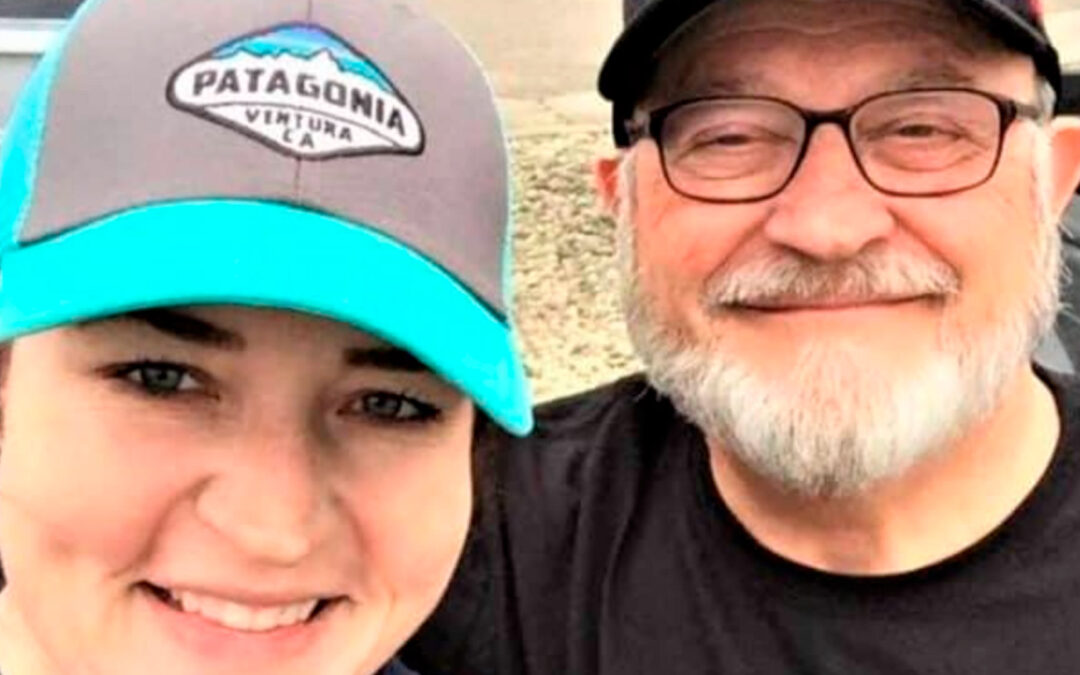
Stengle’s widow, Karen, and their daughter, Nicole who lives in the Twin Cities, claim that a prescription for John Stengle for Amiodarone, a drug used to counteract serious arrhythmia of the heart (when the heart beats out of rhythm), was mishandled by Walgreens.

The drug was prescribed — correctly — to Stengle by Sioux Falls cardiologist Dr. Riyad Mohama on Feb. 28, 2018, Novotny says.

The doctor’s notes show he prescribed a 90-day regimen of the drug for Stengle, starting at two weeks at 800mg each day, then down 200mg every two weeks, “tapering off” the drug, and including a refill part way through the 90 days, Novotny told the Capital Journal on Tuesday.

But Novotny said the pharmacist and/or others at Walgreens, gave Stengle too many pills, did not include the fourth two-week period of the regimen, and restarted the regimen part-way through, going back up to the high levels of the drug, which can be toxic if not ingested correctly.

“It’s a tragic thing,” Novotny told the Capital Journal. “People like Mr. Stengle go home and take it exactly as they are told to do — his wife was actually helping him dispense the medication — and little do they know while they are doing that, he’s actually poisoning himself.”

Amiodarone is for serious heart arrhythmia and has possibly life-threatening side effects, experts say.

“It’s one that should be prescribed only with extreme caution,” Novotny said. “It’s a good drug when it’s used appropriately, but can be very bad when it’s used inappropriately.”

Novotny said the family is suing Walgreens and its pharmacy, but not the heart physician that prescribed the drug. The Stengle family alleges Walgreens improperly instructed Stengle and, effectively, overdosed him on the drug, leading to this death.

Stengle’s widow and daughter want to make sure not only their losses are addressed but also “to try to make sure things like this don’t happen to other people,” he said.

Walgreens’ attorneys in Minneapolis did not return calls for comment Tuesday.

Walgreens has also not yet responded to the details alleged in the Stengles’ complaint in state court, while currently seeking a change of venue to federal court.

According to the Stengles’ complaint in state court:

The drug is metabolized by the liver and if “the patient suffers Amiodarone toxicity, vital organs such as the liver, lungs and kidneys may become irreversibly damaged, leading to death.”

Dr. Mohama prescribed a 90-day regimen for Stengle to take the pills at a stepped-down level: two weeks of 800mg; two weeks of 600mg; two weeks of 400mg and two weeks of 200mg.

In its dosage instructions to Stengle, Walgreens did not include the two-week period of 200mg level, which the complaint calls “negligent conduct.”

“Walgreens then filled the prescription with approximately 500 Amiodarone pills, rather than the correct number of approximately 126 pills,” and “refilled the prescription long before the pills ran out” and “restarted the entire heavy-tiered dosing…,” according to the complaint.

“Mr. Stengle’s body, over the course of several months, suffered from Amiodarone toxicity. Over time, Mr. Stengle’s vital organs began to shut down, and he eventually suffered from multi-organ failure.”

“Mr. Stengle suffered a long, painful death witnessed by his wife and his daughter. On Feb. 1, 2019, Mr. Stengle suffered a premature and preventable death.”

Before his death, he “endured severe conscious mental and physical pain and suffering,” for which the Stengles seek damages.

His “untimely” death also deprived his estate “of expected accumulations had John Stengle lived to his normal life expectancy.”

Stengle’s widow and daughter say they suffered the loss of his care and support as well as the expenses of his funeral. Stengle’s funeral was held at Lutheran Memorial Church in Pierre.

According to his obituary published in the Capital Journal, Stengle was born in Des Moines and grew up in Sioux Falls. He lived in Watertown, South Dakota, where he met his wife and their daughter was born. He spent his latter years in Pierre working as an advocate for people with disabilities, as director of The Arc of South Dakota. He was invited to the White House in 1990 to witness the signing of the Americans with Disabilities Act. In 2001, he was hired as executive director of the Housing and Redevelopment Commission of Pierre.

“He was a good, good dude,” Novotny said. “He played guitar in his church band every week. He had a lot of life to live and to give to his community and to his family going forward.”


Article Source: CapJournal.com

I Was Injured on Public Transportation. What Should I Do?

I Was Injured on Public Transportation. What Should I Do?

[vc_row][vc_column][vc_column_text]

Public transportation methods – subways, buses, trains, and commuter ferries – are safer than being in a car. That doesn’t mean injuries aren’t possible. Bureau of Transportation provides a lot of statistics for the number of accidents each year that injure workers, passengers, and bystanders or other drivers.

Bus crashes in 2017 totaled 67,000. It’s important to note that the BTS doesn’t break it down by school bus, tour bus, or public transportation. Train accidents led to just over 10,300 accident reports, while transit accidents were lower at 7,080. Finally, some of the 6,545 waterborne accidents affected people taking public ferries.

What Are Common Carrier Laws?

By definition, a carrier is a company that’s responsible for the transport of people or goods. They include bus companies, ferries, commuter trains, taxis, subways, etc. Part of the job is for that carrier to transport the “goods” safely. Until the people or items reach their destination, the carrier must do everything possible to keep them safe.

There are exceptions to the rule. Accidents caused by an act of nature, terrorism/crime, defects, or fraud are exempt from liability. For example, if a freak blizzard caused a bus to slide off the road, the bus company isn’t liable for acts of nature.

Despite the liability laws, you must be able to prove negligence. If you’re on a bus and the driver slams on the brakes to avoid a drunk driver who is about to run a stop sign, the driver is actually taking responsible, preventative action. If you were thrown out of your seat, the driver of the bus was not negligent.

Let’s say you’re on a commuter train that goes too fast around a curve. The investigation uncovers the fact that the railroad engineer fell asleep and wasn’t controlling the train. The engineer shouldn’t have been sleeping and is liable.

If you believe the public transportation company or driver was negligent, there are a few things you need to do. Go through these steps to make sure you have the information you need if you decide to proceed with a personal injury lawsuit.

Allow Doctors to Examine You

If you’re injured while using public transportation, you have rights if you’re injured through no fault of your own. The very first thing you need to do is make sure you’re okay. Your well-being is the most important thing to take care of. Ask to be seen by paramedics. If that’s not possible at the time, go to an urgent care clinic or hospital emergency room on your own.

If you do decide to sue the public transportation company, you want paperwork from the doctor or hospital that shows you put your health and safety first. You didn’t wait days or weeks to get checked out, which can suggest the injury happened at another time. You prioritized your well-being and followed the doctor’s instructions.

Keep track of the medical expenses that build up. If you need physical therapy, attend those appointments and keep track of those bills, too. You’ll want to get your expenses covered by the responsible party. If you miss work, get a letter from your employer that lists your hourly wage or salary and normal hours. Get a note from your doctor that details how long you will be unable to work.

Talk to Authorities

Talk to the authorities who investigate the crash. Make sure you get an officer’s name and contact information. You’ll want to be updated on the investigation to learn how and why it happened. You’re going to share your account as a passenger. It’s okay to focus on your physical health before you give your account. If you’re in pain and struggling to stay focused, tell the authorities you want medical care first.

You may want to get names and contact information for any witnesses and other passengers. Get photos of your injuries, damaged personal items, and the accident scene. If you’re injured, don’t prioritize this. You can ask a friend or witness to do this for you. When you are well enough, you can call the officer you spoke to and ask for updates.

Seek Advice From a Personal Injury Attorney

There are limitations on how long you have to file a personal injury lawsuit. While it’s generally two years in Iowa, rules may change if you’re suing a government agency. This is why it’s important to seek a free consultation with an expert in public transportation injuries.

Trial Lawyers for Justice specialize in personal injury law. Call them to discuss your bus accident, train accident, or injuries received in a public transportation accident. TL4J’s Iowa attorneys offer assistance via online chat or by calling 1-866-854-5529.

[/vc_column_text][vc_empty_space height=”11px”][/vc_column][/vc_row]

When Happens When a Stoned or High Driver Causes A Car Crash?

When Happens When a Stoned or High Driver Causes A Car Crash?

Cannabis became illegal in Iowa in the 1920s. Efforts to decriminalize it have failed, though medical marijuana did become allowable a few decades ago. CBD oil is also illegal for recreational use, but it is legal for certain medical conditions like cancer, chronic pain, MS, Parkinson’s, and seizures. Recreational users are subject to stiff penalties for driving while impaired. The state has a zero-tolerance policy. If a stoned or high driver causes a crash, the laws are in your favor. Here’s what you need to know.

Penalties for Driving While Impaired

The penalties for driving while impaired are clear. No amount of a controlled substance is allowed in the bloodstream. A first offense comes with a minimum of 48 hours up to a year in jail. If the impaired driving led to a crash that caused bodily injuries a fine of $1,250 is also applicable but may be replaced by community service in some situations. Loss of license for 180 to 365 days is also applicable.

A second offense leads to a jail sense of 7 days to 2 years, fines of $1,875 to $6,250, loss of license for up to 2 years, and participation is required in substance abuse and impaired driving programs.

The jail time for a third offense is 30 days to 5 years, fines ranging from $3,125 to $9,375, loss of license for up to 6 years, mandatory participation in substance abuse and impaired driving programs, and other conditions the judge feels are necessary.

Those are the penalties the driver faces, but what about you? You’re left with car repair and towing bills to pay, medical bills, time off from work, and more. Here’s what you need to do to make sure you get fair treatment following a crash with a stoned or high driver.

Gather as Much Evidence as Possible

What is most important is that you take care of yourself. Common injuries following a car crash include head injuries, whiplash, bone fractures, and lacerations. If you’re not sure if you’re injured or not, stay put until paramedics arrive. You can call 911, but if you can’t move, witnesses and other drivers will be doing that for you.

If you’re okay and your car is drivable, move as far off the road as possible. Take photos of your car, the area where the crash occurred, traffic signs and signals, and other cars or property damaged in the crash.

Get names and contact information for witnesses. Get the other driver’s car information, insurance information, and contact information. You’ll need all of this when you file a claim. If the other driver is at fault, you or your insurance agent will file the claim against that driver’s insurance. If the other driver has no insurance or is underinsured, your insurance coverage will help.

Talk to the police when it’s possible. If you’re going to the hospital, the police will come to the hospital to talk to you or instruct you to stop by the police station when you’re released. You need to do this in order for a  report to be filed. You’ll need the report number for your insurance company.

When you’re home and are able, call your insurance company to file the claim. You’ll provide details of the crash, witnesses, the other driver’s information and insurance policy number, the report, and any photos or information you can add.

You’ll wait for results of the other driver’s blood test, the assessment of damages to your car, the replacement estimate if your car is a total loss, and an estimate for the property damages. Lost wages, medical bills, towing bills, and a rental car are also factored into your claim. Once all of this is gathered and valued, you’ll be sent a settlement offer.

Talk to a Car Crash Attorney

We hope you’re not hurt in the crash, but you could well be. In 2012, over 2.5 people went to the ER following a crash. The CDC reports that medical expenses for all crashes during 2012 will total around $18 billion. While 75% of those medical bills accrued during the first 18 months following a crash, there are medical treatments that become necessary years later that are still related to the crash that took place years earlier.

That’s right. Years from now, you could face additional medical bills related to the crash. If you’ve taken the insurance company’s settlement and need help paying for these new medical bills, you could be out of luck. It’s why you must talk to an attorney who specializes in car crashes.

With more than $1.5 billion in judgments and settlements for victims of everything from car crashes to wrongful death, Trial Lawyers for Justice is the team you want on your side following a crash with a stoned or high driver. The insurance settlement offer may not be enough to cover your mental and physical injuries, loss of work, and other expenses related to the crash. Stand up for your rights and get what you deserve. Call the team at 1-866-TL4J-LAW for a free consultation.

TL4J Attorney Benjamin Novotny Named Lawyer of the Year

TL4J Attorney Benjamin Novotny Named Lawyer of the Year

Trial Lawyers for Justice attorney Benjamin Novotny was recently named to the 2018 Lawyers of the Year by Massachusetts Lawyers Weekly for his jury verdict win in the case Larkin v. Johnston.

The award comes as a result of a medical malpractice case in which Ben was able to win a $35.4 million verdict for a woman who suffered a venous varix, similar to a brain aneurysm, when giving birth.

Read more about the case and the award here.

When Should I Call A Lawyer After An Auto Crash

When Should I Call A Lawyer After An Auto Crash

No one ever plans on being involved in a car crash, so when it does happen, many people are unsure of what to do or who to turn to for help. What should you do immediately following the crash? When can an attorney help you? When should I call a lawyer after an auto crash? Here’s what you need to know:

What should you do after a car Crash?

You may be in complete shock after being involved in a car crash, but try to calm yourself down and think clearly. Your first priority should be calling the authorities and seeking medical treatment for your injuries. Even if you don’t believe your injuries are serious, it’s best to get checked out by a doctor in case you have an injury that is just not visible, such as a concussion. Keep all documentation related to your injuries so you have proof of the expenses you incurred as a result of the crash. You should also follow the doctor’s orders regarding medications, additional tests, and follow-up appointments closely. If you don’t, the insurance company could argue your injuries were not as serious as you claim because if they were, you would have followed the doctor’s orders.

If you can, take pictures of the scene of the crash so you have documentation of the property damage, your injuries, and any traffic signals that the at-fault driver may have ignored or violated. If there is a dispute over who caused the crash, these pictures can help determine who was at fault.

It’s important to exchange contact information with the other parties involved in the crash, as well as any witnesses who could have seen what happened. But, that’s as far as your communication with the other people on the scene should go. You should never engage in conversation about what happened or take blame for the crash.

When do you need an attorney?

Some people aren’t sure whether they are in need of an attorney after a crash. How can you tell when your case warrants an attorney? If the crash involved any type of serious injury that required a trip to a doctor, you should consult with an attorney about your legal options. Attorneys can also help in cases involving fatalities. If the police report does not accurately describe the events of the crash, or puts you at fault when you believe it was the other party’s fault, an attorney can help. Basically, if believe you were injured in a car crash because of another person’s negligence, it’s wise to get in touch with an attorney to discuss the possibility of filing a personal injury claim.

If you chose to start the process off on your own, but are struggling to come to an agreement with the insurance company, an attorney can take over and handle the negotiations on your behalf. But, keep in mind it’s in your best interests to let an attorney handle it from the very beginning so you do not say something to the insurance company that can be misconstrued and used against you later on.

An attorney can also help when the insurance company is acting in bad faith. An insurance company acts in bad faith when they deny you the coverage you have paid for, refuse to pay the claim before even investigating the issue, fail to pay the claim in a timely manner, or don’t provide you with an explanation for why your claim is denied. In these situations, an attorney can be your ally in the fight for justice.

If you’re in doubt, it’s always best to contact an attorney to discuss the crash and determine if you have the right to file a personal injury claim.

How soon should you contact an attorney?

It’s recommended you contact a personal injury attorney as soon as possible following the crash. Why? The at-fault party will immediately notify his insurance company, who will then try to get in touch with you to discuss what happened. You should never give a statement to an insurance company without first contacting an attorney. Remember, the insurance company is not looking out for your best interests. They are not concerned with how much you might have in medical expenses or how many days you may have had to take off of work because of your injuries—insurance companies are only concerned with getting you to accept a low settlement offer. An attorney will be able to deal with the insurance company for you so you don’t have to worry about saying the wrong thing or agreeing to a number you’re not satisfied with.

There is also a statute of limitations for personal injury claims, meaning after a certain period of time has passed, you will no longer be able to file a claim to recover compensation for your injuries. In most states, the statute of limitations is two years from the date of the crash. This may seem like plenty of time, but it passes quickly, especially when you are recovering from a serious injury. The sooner you get in touch with an attorney, the sooner he can begin the process of formally filing a claim.

Once you get in touch with an attorney, you will need to provide him with all of the information you have about the crash, including your recollection of what happened, the other parties’ contact information, the police report, and medical documentation of your injuries. Then, your attorney will determine what he thinks your personal injury claim is worth, and begin the negotiation process with the insurance company. If an agreement cannot be reached through negotiation, the case will have to go to trial.

If you or a loved one has been injured in a car crash, don’t hesitate to contact the Trial Lawyers for Justice to discuss your case in a free consultation. You may be entitled to compensation for your medical expenses, pain and suffering, and lost wages. Contact us today by calling 866-854-5529.