

What Should I Do If I’m Injured In A Department Store?

What Should I Do If I’m Injured In A Department Store?

Slip and fall accidents can happen anywhere—even in a department store. There are a number of hazards that could cause slip and fall accidents inside a department store, including slippery floors, products that have fallen onto the store’s walkways, defective stairs, and torn carpeting. Outside the store, customers may trip over cracks in the sidewalk or potholes, especially if the parking lot is not adequately lit.

This type of accident can happen when you least expect it, which is why it’s important to know exactly what you should do if it happens to you.

Seek Medical Attention

Your health and safety should be your first priority immediately following a slip and fall accident. If you believe you are seriously injured, stay where you are and call for help. Do not attempt to move or stand up until help has arrived—this is especially important if you think that you have injured your back.

Many victims make the mistake of thinking that they do not need to seek medical attention because they only have minor injuries. But, this is not the case. Every slip and fall victim should seek medical attention, regardless of how serious you think your injuries are. Why? Symptoms may not develop until hours after the accident. In some cases, what seemed like a minor injury may get worse as time passes. For these reasons, it’s best to get checked out by a doctor just in case you have sustained an injury that is more serious than you think.

Gather Evidence

If you are able to, start to gather evidence at the scene of the slip and fall. First, try to identify the hazard that caused you to trip. Was the floor wet? Did you trip over an object that shouldn’t be there or a tear in the carpeting? If you figure out what it was that caused you to slip, take photos of it with your smartphone. You should also look around to see if there are any signs warning you of the hazard. For example, if you slipped because of a spill on the floor, look for a sign that warns you that the floor is wet. Take pictures of the area surrounding the hazard to prove that there were no warning signs in place. You should also look around to see if you spot any surveillance cameras and make a mental note of where they are located in the store.

Talk to Witnesses

If you fall in a department store, chances are that there will be at least one person who witnessed the incident. Talk to this person and ask if you can have her contact information in case you need to ask her questions about what happened later on. The property owner may try to claim that you are lying about what happened, so having a witness that supports your side of the story could be important to your case. Even if the witness did not see you actually fall, her testimony could be helpful because she could provide information about the store’s lighting, the employees’ response to your fall, or the hazard that caused you to fall.

Notify the Department Store

If no one that works at the store saw you fall, it’s important to notify someone right away. Most department stores have company policies that require employees to create official accident reports after someone is injured on the property. Find any employee and let them know what happened—even if the employee you talk to is not trained to write one of these reports, she should be able to call the appropriate parties.

Provide as much information as possible to the person who is writing the accident report. Make sure you ask for the person’s name so you know who you spoke to within the store. Do not admit fault or comment on your injuries at this point. You should also listen closely to what the employee is saying. If she says anything along the lines of “this happens all the time” or “this just happened to someone else the other day,” make a mental note and write it down as soon as you leave the store.

Seek Legal Representation

Anyone who has been injured in a slip and fall accident should get in touch with a personal injury attorney as soon as possible. The property owner may be liable for your injuries because of his failure to maintain safe conditions on the property. But, the owner is not automatically held liable for every injury that occurs on his property. In order to recover compensation, you must be able to prove that the property owner knew or should have known about the hazardous condition that caused your accident.

Proving liability can be incredibly difficult in slip and fall cases, which is why you will need an experienced attorney. A personal injury attorney will immediately launch an investigation to determine what happened, how long the hazard was present on the property, and if the property owner was aware that the hazard existed. These investigations can be complex and very difficult to conduct without an attorney’s help. Plus, you will need an experienced attorney who knows how to negotiate with the property owner’s insurance company in order to get you the compensation that you need.

Have you been injured in a slip and fall accident in a department store? If so, contact Trial Lawyers for Justice today to schedule a consultation regarding your case. Our experienced personal injury attorneys will help you seek justice against the negligent parties and recover the compensation that you deserve. The sooner that you contact our team about your case, the better the outcome may be.

The Dangers Of Overloaded Or Improperly Loaded Trucks

The Dangers Of Overloaded Or Improperly Loaded Trucks

There are a number of factors that can contribute to the cause of a truck crash, including a distracted driver, fatigue, bad weather, poorly maintained vehicle, and malfunctioning parts. One factor that is often overlooked is the truck’s cargo.

Overloaded Cargo

There are several issues that can occur when cargo is not properly loaded onto the truck. The first is overloading, which occurs when the truck is so heavy that it exceeds weight limits put in place by the Federal Motor Carrier Safety Administration (FMCSA). The weight will vary depending on the truck, which is why truck drivers and cargo loaders should pay close attention to the vehicle’s identification plate, which should have the maximum permissible axle weight and maximum permissible gross vehicle weight.

If a truck is overloaded with cargo, it may have mechanical issues because of the extra weight. These mechanical failures could cause the driver to lose control of the vehicle and get into a catastrophic crash. Even if the weight does not lead to a complete mechanical failure, the extra weight could still make it difficult for the brakes to properly stop the truck.

A truck that exceeds the legal weight limit could also be difficult to control when the driver is going down an incline. Gravity could pull the truck forward, causing it to collide with another vehicle on the road.

Trucking companies, cargo shippers, and drivers are well aware of the dangers that overloaded cargo can cause. However, that doesn’t stop some of them from overloading trucks in order to meet tight deadlines or increase profits by shipping per truck.

Unevenly Distributed Cargo

People who are loading cargo onto a truck have to pay attention to how much cargo is loaded and also how it is loaded. If cargo is not loaded correctly on to the truck, it could still cause problems even when it is well within the acceptable weight range.

The cargo must be evenly loaded on both sides of the truck. If one side is heavier than the other, making simple maneuvers such as changing lanes or turning could be deadly. The uneven distribution of weight could cause the entire truck to turn on its side, putting the truck driver and other drivers in grave danger.

Unsecured Cargo

If the cargo is properly loaded and within the acceptable weight range, it can still lead to a crash if it’s not secured. The cargo could easily topple over at some point during the trip, creating a loud noise that could take the driver by surprise and cause him to swerve into another lane. Unsecured cargo could also affect the distribution of the weight if it begins to shift around. If too much cargo falls to one side, then the truck may flip over the next time the driver turns or changes lanes.

Of course, unsecured cargo could also cause injuries or fatalities if it begins to fly off of the back of the truck. Drivers may not have time to swerve out of the way to avoid cargo that is heading in their direction. Even if the cargo doesn’t hit a vehicle, it could still be dangerous if it lands in the middle on a highway and creates a road hazard.

Liability in Truck Crashes Involving Overloaded or Improperly Loaded Trucks

If you are involved in one of these truck crashes, it’s very likely that you could sustain serious injuries. Fortunately, a personal injury attorney may be able to help you recover compensation for your medical expenses, lost wages, and pain and suffering. But first, you have to determine who is liable for the crash.

The company that is shipping the cargo from Point A to Point B is often responsible for loading it into the truck. If the cargo is loaded without a driver or representative from the trucking company present, then the driver and trucking company can usually not be held liable. Instead, the company that loaded the cargo would be liable for your injuries. However, if a truck driver or another representative from the trucking company observed the cargo being improperly loaded onto the truck, he may be held liable if he did not speak up about safety issues.

Truck drivers are required to stop and inspect their cargo at certain points during their trip. This regulation was put in place to reduce the number of crashes caused by cargo loading issues. The driver must inspect the cargo within the first 50 miles of his trip to ensure everything is still secure. The driver has to check the cargo again whenever he makes a change of duty status, or after he has driven 150 miles or 3 hours. Drivers who fail to comply with these regulations may be held liable if a problem with the cargo causes a crash. The driver’s employer can also be held liable due to the “respondeat superior” legal doctrine, which holds employers liable for their employees’ negligent actions.

To determine who is liable, a personal injury attorney will need to conduct a thorough investigation of the crash. He may need to interview people involved with the loading of the truck, the truck driver, and representatives from the trucking company. He may also need to request records from the trucking company that shows how the cargo was loaded, how much of it was loaded, and how often the driver inspected the cargo.

If you have been injured in a crash caused by an overloaded or improperly loaded truck, contact Trial Lawyers for Justice today to schedule a consultation regarding your case. Our experienced personal injury attorneys will help you seek justice against the negligent parties and recover the compensation that you deserve.

Attorney Nick Rowley Wins $6.5 Million For Client In Nightclub Assault

Attorney Nick Rowley Wins $6.5 Million For Client In Nightclub Assault

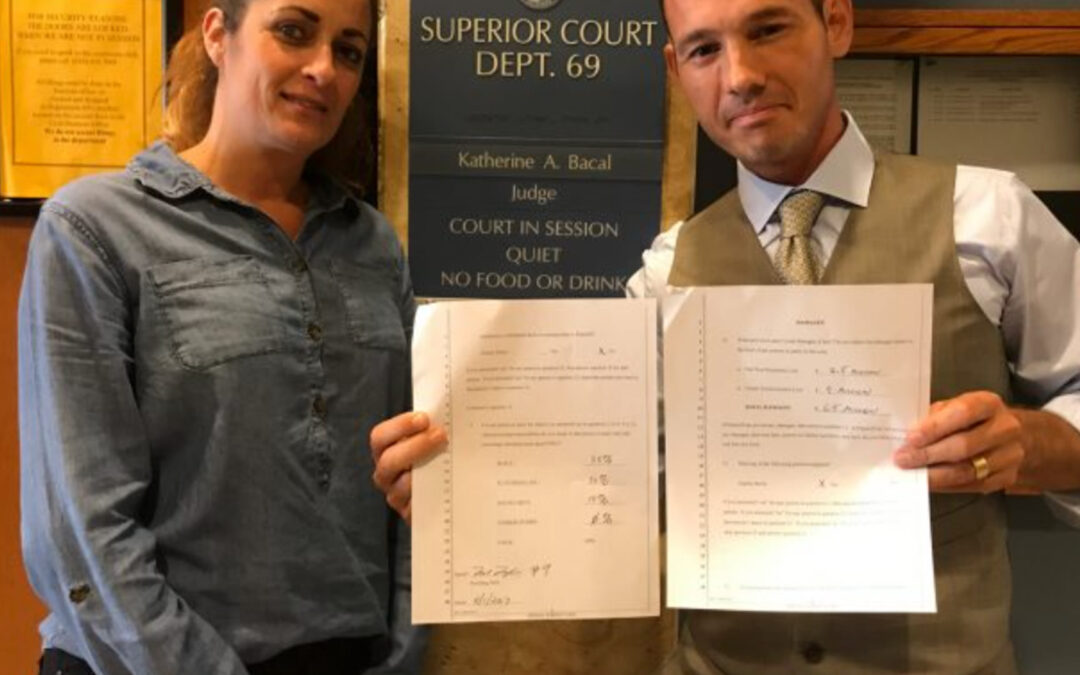
SAN DIEGO, August 7, 2017— Attorney Nick Rowley, partner at the law firm of Carpenter, Zuckerman, & Rowley and founder of Trial Lawyers for Justice, announces a verdict of $6.5 million for client Lisa Lopez as a result of an assault and blindness caused by negligent security and reckless conduct by shirtless bartenders at a popular San Diego nightclub who watched and laughed at the attack.  Rich’s nightclub and XL Staffing security destroyed evidence of the video footage which showed the assault and the Superior Court of San Diego instructed the jury on the destruction of evidence.

On December 21, 2012, Lisa Lopez was a patron at Rich’s Nightclub in San Diego, with her best friend’s husband, Charles Burris, and others.  Charles met another friend, Sandra Beyl, an ex-girlfriend, at the club.  Later in the evening, a verbal confrontation began between Sandra and Charles. The altercation then became physical and lasted for five to ten minutes while nearby bartenders laughed and nightclub security did nothing to intervene to diffuse the situation as San Diego permit required them to do.

Hoping to diffuse the argument, Lisa approached Sandra and Charles and encouraged them to stop arguing when without warning, Sandra smashed a beer bottle onto Lisa’s forehead and eye, resulting in significant facial lacerations, severe damage, and vision loss to her right eye.  Neither the bar or security called the police or an ambulance despite having detained and handcuffed Sandra Beyl, who was intoxicated and over-served.

“The employees at the nightclub behind the bar who were shirtless decided to laugh and serve more alcohol instead of stopping the violence, and the security staff whose sole job is to protect patrons at the club chose to do nothing to diffuse this situation which lasted 5-10 minutes before Lisa intervened.  Then the Defendants destroyed the video footage,” said Nick Rowley.  “Despite the customer having a bottle shattered on her face and bleeding profusely, the club did not skip a beat or stop the music and instead decided to continue the party and keep selling alcohol.  This was a case of profit over safety.”

“The jury, in this case, realized the fault of club employees and understood the importance of protecting people from violence rather than doing nothing or egging it on with laughter.  They also clearly understood the severe impact this event had on Lisa’s life,” Rowley went on to say.

The jury awarded $2.5 million for past non-economic losses and $4.0 million for future non-economic losses, resulting in a total verdict of $6.5 million.  The top offer from the defense was $75,000 prior to trial.  Then during the trial, the offer increased to $400,000.

“This verdict will help Lisa deal with the loss that resulted from the gross negligence of nightclub and security staff employees, but she will never be the same as she was prior to this incident,” said Rowley.

The trial team for Ms. Lopez consisted of Theresa Bowen, Haytham Faraj, and Nicholas Rowley.

The California law firm of Carpenter, Zuckerman, & Rowley has over 100 employees dedicated to fighting for the rights of the injured.  

With offices in Iowa, Minnesota, Illinois, and California, and offering legal services from coast to coast, Trial Lawyers for Justice specializes in personal injury law. 

Both firms are dedicated to helping clients recover the compensation they deserve for their injuries. For more information, or to schedule a consultation regarding your case, visit www.czrlaw.com or www.tl4j.com today.

Case Number 37-2013-00080607-CU-PO-CTL

5 Shocking Motorcycle Crash Statistics

5 Shocking Motorcycle Crash Statistics

There are over 8.5 million motorcycles on the road in the United States. People often buy motorcycles for the thrill and the unparalleled feeling of freedom that they get when riding down a scenic road. The thought of the wind blowing through your hair on a warm, sunny day may sound appealing, but an innocent ride through the city may end in tragedy.

Motorcyclists face unique risks and dangers when they get on their bikes, and unfortunately, when an crash does occur, it is often far more catastrophic than a car crash. If you have a motorcycle, it’s important to prepare for the dangers that you may encounter on the road. Start by learning about these shocking motorcycle crash statistics:

Motorcyclists Are More Likely to Be Injured or Killed

According to the Insurance Information Institute, motorcyclists are five times more likely than car passengers to be injured in a crash and 29 times more likely to sustain fatal injuries. This is because motorcyclists have far less protection than motorcyclists do. When riding in a car, you are protected by seatbelts that strap your body in and airbags that limit the damage in the event of a collision. However, motorcyclists do not have this type of protection. Wearing a helmet, long-sleeved shirts, thick fabrics, and full-length pants can help, but these items don’t come close to providing the same level of protection as seatbelts and airbags.

Even if a car is traveling at a low speed when it hits a motorcycle, the impact could still be strong enough to send the motorcyclist flying off his bike or cause him to fall onto his side. Motorcyclists that are thrown from the bike can sustain traumatic brain injuries, spinal cord damage, road rash, and broken bones. If a motorcyclist falls to his side, it’s likely that the bike will topple over on top of him, pinning him to the ground and possibly crushing his limbs.

Many Motorcyclists Still Don’t Wear Helmets

Motorcyclists don’t have much protection, so you would think that they would take advantage of the little protection that they can get by wearing their safety gear at all times. However, It is estimated that only 50% of motorcyclists wear helmets. In addition, 40% of motorcyclists killed in crashes were not wearing a helmet at the time of the crash. Wearing a helmet is the greatest way to reduce your risk of sustaining a head injury, so not wearing one is irresponsible and dangerous.

Studies have shown that some motorcyclists are more likely to wear a helmet than others. Inexperienced riders, young riders, and motorcyclists who are going on short trips or riding on a hot day are less likely than others to wear a helmet.

Older Motorcyclists Account For More Than Half of All Fatalities

People often think of motorcyclists as young and reckless, but statistics show that older motorcyclists are more likely to be involved in fatal crashes than young riders. The National Highway Traffic Safety Administration reported that 54% of motorcyclists killed in crashes in 2015 were at least 40 years old, which represents a 17% increase in deaths within this age group since 2006.

Why are so many older motorcyclists killed in crashes? According to researchers at Brown University, riders at this age begin to experience a decline in vision and reaction time. This makes it more difficult for them to see potential hazards and quickly react to changes on the road to avoid crashes. In addition, older riders tend to buy larger bikes that they view as more stable and reliable. However, these bikes are more likely to roll over in the event of a collision and lead to fatal injuries.

Motorists Are Usually At Fault For Motorcycle Crashes

About 75% of all motorcycle crashes involve a collision between a motorcycle and at least one car. Most of these motorcycle crashes are caused by motorists who fail to spot motorcycles in traffic when they turn, change lanes, move through an intersection, or merge. These drivers either fail to detect the motorcyclist altogether or only see him when it is too late to avoid the crash. The majority of motorcycle crashes occur in intersections when the motorist violates the motorcyclist’s right-of-way or fails to obey a traffic sign or light.

The other 25% of crashes are single-vehicle crashes, meaning they only involve the motorcycle. Roadway hazards such as potholes or debris can cause this type of crash, however these hazards only account for 2% of all collisions. More common causes of single-vehicle crashes include speeding, making wide turns, or sliding out due to rider error.

Motorcycle Crashes Cost $16 Billion Every Year

The Government Accounting Office (GAO) estimates that motorcycle crashes cost the country about $16 billion every year. This figure includes the cost of providing emergency medical services and other medical costs such as surgeries, rehabilitation, and mental health counseling. Also included is the loss of productivity, which occurs when motorcyclists must take time off of work to recover from their injuries. Believe it or not, the GAO estimates that the loss of productivity is higher than the cost of medical expenses for motorcycle crash victims. Loss of productivity typically accounts for 44% of the costs incurred after a crash, whereas medical expenses only account for 18%. However, it’s important to note that the GAO failed to include long-term medical expenses in this calculation. It’s possible that medical expenses could be the leading cost of motorcycle crashes if long-term expenses were factored in as well.

If you have been injured in a motorcycle crash, contact Trial Lawyers for Justice today to schedule a consultation regarding your case. Our team of attorneys has the experience and legal knowledge to help you recover the maximum amount of compensation available.

TL4J Medical Malpractice Verdict Upheld Against Mayo Clinic Health System and Winneshiek Medical Center

TL4J Medical Malpractice Verdict Upheld Against Mayo Clinic Health System and Winneshiek Medical Center

On June 15, 2017, an Iowa District Court judge upheld a Winneshiek County Jury’s unanimous verdict in a medical malpractice claim in favor of Patricia Moore and against Defendant Mayo Clinic Health System-Decorah and Defendant Winneshiek Medical Center.  The Winneshiek Medical Center was determined to be 67% at fault, and the Mayo Clinic Health System-Decorah was determined to be 33% at fault.  The jury awarded Patricia $400,000.00.  $150,000 for past pain and suffering and $250,000 for future pain and suffering.  The District Court entered judgment against the Defendant Winneshiek Medical Center and in favor of Patricia in the amount of $268,000.00 and entered judgment against Defendant Mayo Health Clinic Systems, Decorah and in favor of Patricia in the amount of $132,000.00.

Patricia was represented at trial by Trial Lawyers for Justice attorneys Dominic Pechota and Rod Ritner.  At trial, it was established that on April 11, 2011, Patricia Moore presented at the Winneshiek Medical Center in Decorah, Iowa complaining of sharp grimacing pain in her left chest and back.  Patricia was seen by emergency room physician Dr. Kent Svestka, an employee of Mayo Clinic Health System-Decorah Clinic.  Dr. Svestka ultimately ordered a CT with contrast to rule out an aortic dissection. Patricia told multiple healthcare professionals on that day that she was allergic to contrast dye.  Patricia’s chart on April 11, 2011 reflected that she had a contrast dye allergy, and her past hospital records, available electronically, also reflected that she had a contrast dye allergy.  In fact, on two prior occasions, (one only two months prior) Dr. Svestka had treated Patricia, and he documented both times that Patricia had a history of contrast dye allergy.

On the way to the CT, Patricia informed the technician, an employee of the Defendant Winneshiek Medical Center, that she was allergic to contrast dye.  The technician administered contrast dye anyway.  Because the CT contrast dye was improperly ordered and administered, Patricia had an anaphylactic reaction and suffered a cardiac arrest.  Although Patricia was able to return to work full time, she continues to experience pain and suffering as a result of the Defendants’ negligence.

Plaintiff’s liability expert Dr. Stephen Scheckel, established that Dr. Svestka was required to, but failed to ascertain whether Patricia had a contrast dye allergy before ordering a CT with contrast.  Dr. Scheckel also established that Dr. Svestka did not conduct an appropriate physical exam or perform necessary testing before ordering the CT exam with contrast, and that a CT exam was not indicated even if Patricia was not allergic to contrast dye.  Dr. Scheckel is Medical Director of Emergency Room at Mercy Hospital in Iowa City.

Defense expert Dr. Edward Mlinek, an emergency room physician from Lincoln, Nebraska, testified that Dr. Svestka was not responsible for ascertaining whether Patricia had an allergy to contrast because the hospital had a system in place to learn of such allergies.  Dr. Scheckel established, however, even had there been a safety net in place and others are to double check, the physician remains responsible because the physician is the one that ordered the medicine and is the one that has the highest level of training.

Dr. Scheckel also established that a CT tech that knows that it is even possible that a patient has an allergy to CT contrast should not proceed with the CT, but instead should contact the ordering physician and inform them of the possible allergy so that the ordering physician can decide how to proceed.  When there is a reported allergy from any source, it is a breach of the standard of care for a CT tech to administer contrast.  It is not within the scope of practice for a CT tech to make the final decision about giving something that can be life threatening.  The jury rejected the testimony of Dr. Milnek who testified that it was acceptable for the CT tech to have administered contrast even after learning of a possible history of allergic reaction to contrast.

Defendant Mayo Clinic Health System-Decorah did not offer any money before trial.  The highest offer of Defendant Winneshiek Medical Center was $25,000.00.

Mayo Clinic Health System-Decorah was represented at trial by Gregory Karpenko with Fredrikson & Byron, P.A. from Minneapolis, Minnesota and Christine Conover, with Simmons Perrine Moyer Bergman PLC in Cedar Rapids.  Winneshiek Medical Center was represented by Timothy Boller with Weilein & Boller P.C. from Waterloo.

This verdict in the Moore case follows a record $1,188,735 jury verdict from January 2016 that was obtained by Mr. Pechota and Mr. Ritner in a Winneshiek County case involving a collision between a motorcycle and a car.